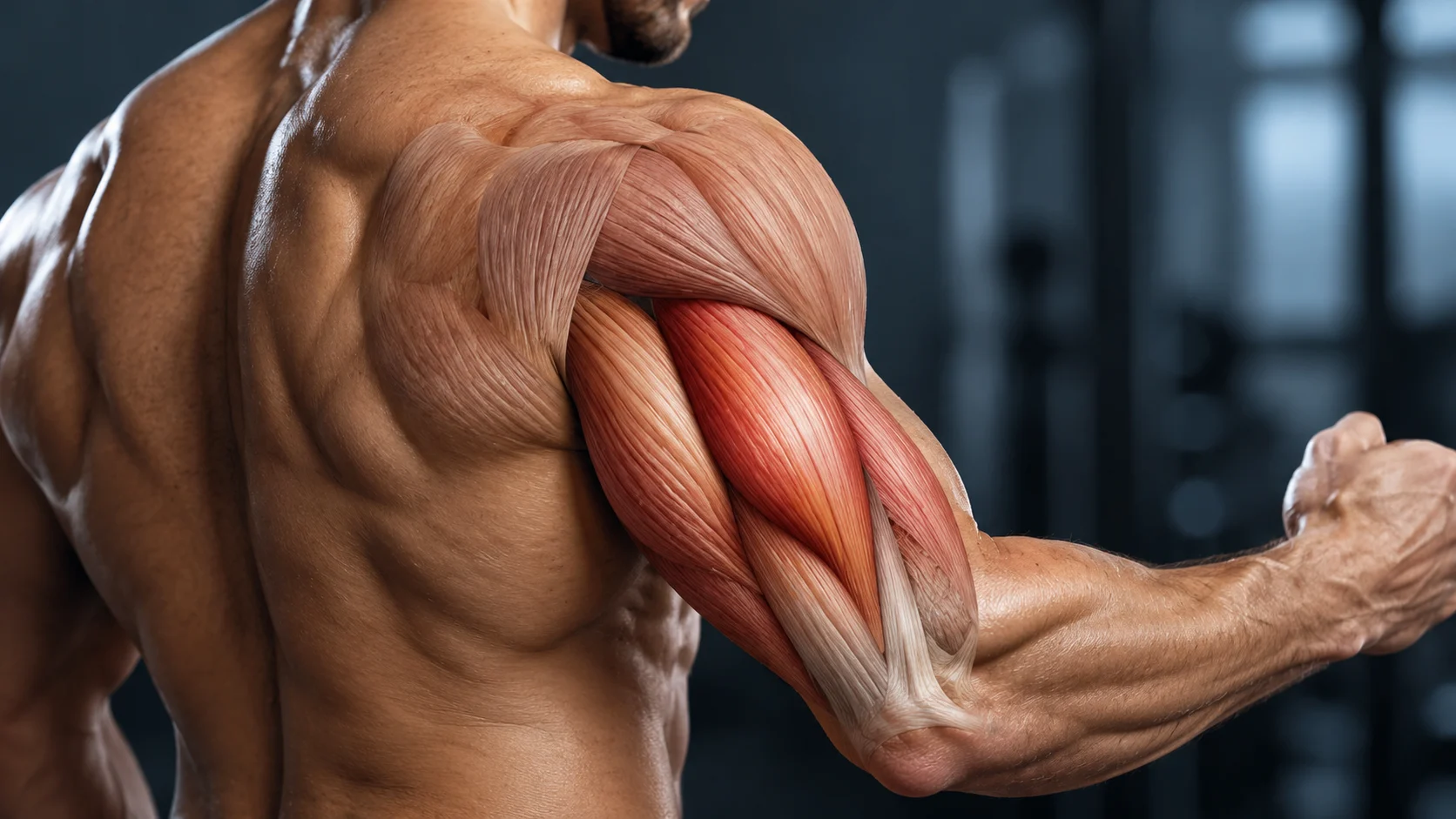

The triceps are one of the most important muscle groups in your upper arms. They help you straighten your elbows, push objects, and perform everyday movements that require arm strength. Understanding the parts of the tricep can help you learn how your arms work, improve exercise technique, and recognize the importance of balanced upper-body strength.
The triceps muscle has three distinct sections, commonly called heads, that work together to support elbow extension and arm stability. Each head has a different anatomical origin, but all three contribute to the same major movement. Learning about their structure, location, and function provides a clearer understanding of upper-arm anatomy.
What Are the Triceps Muscles?
The triceps brachii is a large skeletal muscle located on the back of the upper arm. Its name comes from the Latin words describing a three-headed arm muscle, reflecting its three separate anatomical sections. These sections work together to extend the elbow, making the triceps essential for pushing movements, lifting activities, and normal upper-limb function.
The triceps muscles occupy much of the posterior upper arm, opposite the biceps brachii on the front. While the biceps primarily bend the elbow, the triceps straighten it by producing extension at the elbow joint. This opposing relationship allows the arm to move smoothly while maintaining control during activities that involve reaching, carrying, or applying force.
Understanding triceps anatomy is useful for athletes, fitness beginners, and anyone interested in muscular function. The muscle contributes to exercises such as push-ups, bench presses, and overhead extensions, but its importance extends beyond workouts. Even simple activities like pushing open a door or rising from a chair using your arms depend partly on triceps strength.
What Are the Three Parts of the Tricep?
The three parts of the tricep are the long head, lateral head, and medial head. These sections are named according to their anatomical position and structure within the upper arm. Although they share a common primary function, each head has a distinct origin and contributes differently to movement depending on arm position and mechanical demands.
The long head extends from the shoulder blade toward the elbow and crosses both the shoulder and elbow joints. The lateral head occupies the outer portion of the upper arm, while the medial head lies deeper beneath the other two sections. Together, these three heads form the triceps brachii muscle and provide the force needed for elbow extension.
All three triceps heads eventually connect through a common tendon that attaches to the olecranon of the ulna. This attachment allows muscular contractions to straighten the forearm relative to the upper arm. Understanding these structural differences explains why different arm positions can influence muscle activation, although all three heads generally work together during extension movements.
Long Head of the Tricep: Anatomy and Function
The long head of the triceps is the largest of the three heads by overall muscle volume in many individuals. It originates from the infraglenoid tubercle of the scapula, a small area beneath the shoulder socket. Because its fibers cross the shoulder joint, the long head contributes to both elbow movement and certain shoulder movements.
One important function of the triceps long head is extending the elbow alongside the lateral and medial heads. It also assists with shoulder extension, which involves moving the upper arm backward relative to the torso. Additionally, the long head contributes to shoulder adduction and helps support the shoulder joint during certain controlled upper-limb movements.
Exercises involving elbow extension with the arm raised overhead place the long head at a relatively lengthened position. Overhead dumbbell extensions and cable extensions are common examples of movements that challenge this section. However, these exercises do not isolate the long head completely, because all three triceps heads participate in producing elbow extension.
Lateral Head of the Tricep: Anatomy and Function
The lateral head of the triceps is located on the outer and posterior portion of the upper arm. It originates from the posterior surface of the humerus, above the radial groove, and from nearby connective tissue. This location gives it a distinct anatomical position and makes it particularly noticeable when the upper-arm muscles are contracted.
The lateral head contributes strongly to elbow extension and becomes especially active during demanding pushing movements. It helps generate the force required to straighten the arm against external resistance. Unlike the long head, the lateral head does not cross the shoulder joint, so its direct movement function is limited primarily to elbow extension.
Exercises such as cable pressdowns, close-grip pressing movements, and controlled push-ups involve substantial lateral head activity. The amount of contribution varies with resistance, joint position, and individual movement mechanics. Although certain exercises may emphasize the lateral head, balanced triceps training generally develops this section alongside the long and medial heads rather than isolating it entirely.
Medial Head of the Tricep: Anatomy and Function
The medial head is the deepest of the three triceps heads and lies primarily beneath the long and lateral heads. It originates from the posterior surface of the humerus below the radial groove. Although much of this muscle section is covered by surrounding tissue, its anatomical location allows it to contribute consistently to elbow extension.
The medial head plays an important role in stabilizing and controlling elbow movement during everyday activities. It remains active across many elbow-extension tasks, including movements that require relatively little force. This consistent involvement makes it particularly important for controlled arm straightening, although the other heads also contribute to smooth and coordinated movement.
The medial head works during exercises such as triceps pressdowns, push-ups, and elbow extensions performed with different grips. Because it is positioned deeply within the upper arm, its development cannot be assessed simply by looking at external muscle definition. Maintaining balanced training and proper exercise technique helps develop overall triceps strength without requiring a separate medial-head-only exercise.
Triceps Origin, Insertion, and Muscle Attachments
In anatomy, a muscle’s origin refers to its attachment that is typically more stable during a particular movement. The insertion is the attachment that generally moves when the muscle contracts, although movement conditions can change these roles. Understanding triceps origins and insertion helps explain how the muscle transfers force between the shoulder region, upper arm, and forearm.
The long head originates from the infraglenoid tubercle of the scapula, while the lateral head originates above the radial groove on the humerus. The medial head begins below that groove, also on the posterior humerus. These different origins influence the mechanical relationship between each muscle section and the elbow during extension movements.
Despite their separate origins, the three heads join through a common triceps tendon that inserts on the olecranon process of the ulna. The ulna is one of the two main forearm bones and forms an important part of the elbow joint. When the triceps contract, tension passes through this tendon to produce elbow extension and support controlled movement.
How Do the Triceps Muscles Work?
The primary function of the triceps brachii is elbow extension, which straightens the arm at the elbow joint. This action occurs when the muscle fibers contract and generate tension through their shared tendon. The resulting force moves the forearm relative to the upper arm, allowing activities such as pushing, reaching, and supporting body weight through the hands.
The triceps work together with other muscles that control shoulder, elbow, and wrist positioning. During pushing movements, the chest and shoulder muscles may help move the upper arm while the triceps extend the elbow. During controlled lowering movements, the triceps can also contract while lengthening to regulate elbow bending against resistance.
The muscle receives its main nerve supply from the radial nerve, which carries signals that activate triceps muscle fibers. Blood reaches the region through branches of arteries supplying the posterior upper arm. Proper nerve function, circulation, and coordinated muscle activity are necessary for normal triceps performance, strength development, and upper-limb movement.
Triceps vs. Biceps: Understanding the Difference
The triceps and biceps are major upper-arm muscles that perform different primary actions at the elbow joint. The biceps brachii is located on the front of the upper arm, while the triceps brachii occupies the back. Their opposing actions help control arm movement, particularly when alternating between bending and straightening the elbow.
The biceps primarily assist with elbow flexion and forearm supination, which involves turning the palm upward. In contrast, the triceps primarily produce elbow extension and help straighten the forearm. Both muscle groups contribute to stability because coordinated contractions allow the elbow to move smoothly during lifting, pushing, pulling, and carrying activities.
Balanced upper-arm training includes movements that challenge both elbow flexion and extension. Exercises such as curls focus on elbow flexion, while pressdowns and extensions emphasize the triceps. Developing both muscle groups supports general arm strength and functional movement, although training should also include the shoulders, forearms, and surrounding muscles for complete upper-body conditioning.
Best Exercises for Training All Three Triceps Heads
The three heads of the triceps participate in most elbow-extension exercises, but arm position can influence their relative mechanical demands. A well-rounded training routine can include movements performed with the arms overhead, beside the torso, and during pressing activities. Combining different movement patterns may help strengthen the triceps through a useful range of motion.
Overhead triceps extensions are especially useful for challenging the long head in a lengthened position. Cable pressdowns and controlled dumbbell extensions also work the triceps effectively while allowing resistance to be adjusted. Close-grip push-ups and pressing exercises provide additional opportunities to strengthen the muscle through coordinated elbow and shoulder movements.
Exercise selection should reflect individual comfort, available equipment, and experience rather than an assumption that every head requires complete isolation. Beginners can start with manageable resistance and focus on smooth, controlled repetitions. Allowing adequate recovery between demanding sessions helps the muscles adapt, while gradual increases in training difficulty support consistent strength improvements over time.
How Arm Position Affects Triceps Activation
Shoulder and elbow positions influence the length and mechanical advantage of the triceps muscle fibers during movement. This is particularly relevant for the long head because it crosses both the shoulder and elbow joints. Raising the arm overhead changes the long head’s length and can affect the tension it experiences during elbow-extension exercises.
When performing an overhead extension, the long head is generally placed in a more lengthened position than during exercises with the arms resting beside the torso. This difference can influence how the muscle responds to resistance. However, the lateral and medial heads remain involved because they also contribute to extending the elbow under load.
Grip orientation, elbow positioning, and movement range can also affect exercise comfort and overall mechanics. Small changes may alter how resistance feels without completely changing which triceps heads are active. Instead of focusing only on one grip or angle, choose positions that allow controlled movement, adequate range of motion, and comfortable joint alignment.
Common Mistakes When Training the Triceps
One common training mistake is using resistance that makes it difficult to control the movement. Excessive weight can encourage unnecessary shoulder swinging, altered elbow positioning, or shortened repetitions. Choosing a manageable load makes it easier to maintain technique and apply muscular effort consistently throughout the exercise without relying on momentum.
Another mistake is assuming that a particular exercise activates only one part of the triceps. Although movement position can influence muscle length and relative activation, all three heads generally contribute to elbow extension. A balanced routine can include different exercise variations without requiring an excessive number of movements or complicated techniques for each anatomical section.
Ignoring discomfort and recovery needs can also interfere with productive triceps training. Persistent elbow pain, unusual weakness, or discomfort that increases during exercise should not be treated as a normal requirement for progress. Modifying painful activities and seeking professional guidance when symptoms persist can help protect joint health while supporting sustainable strength development.
Common Triceps Injuries and Muscle Problems
Triceps-related discomfort can develop from muscle strains, tendon irritation, or repetitive loading around the back of the upper arm. Symptoms may include tenderness, stiffness, or pain during elbow extension and pushing activities. The exact cause depends on factors such as recent activity, training demands, injury history, and the location of the discomfort.
Triceps tendinopathy involves irritation or changes within the tendon that attaches the muscle to the elbow. Repetitive loading without sufficient adaptation or recovery may contribute to this condition. Less commonly, a triceps tendon tear can occur, particularly during a forceful movement, and may cause sudden pain, swelling, and noticeable weakness when straightening the elbow.
Not every episode of upper-arm pain comes from the triceps muscle itself. Shoulder problems, nerve irritation, and other elbow conditions can produce symptoms in nearby areas. Sudden severe pain, significant swelling, or an inability to straighten the elbow warrants prompt medical assessment, while persistent or recurring discomfort should also be evaluated by a qualified healthcare professional.
Important Facts About the Triceps Brachii
The triceps brachii is named for its three anatomical heads, but all three converge into a common tendon near the elbow. This shared structure allows the muscle to generate coordinated extension force rather than functioning as three completely separate muscles. The different origins of the heads contribute to variations in muscle length, mechanical advantage, and movement-related demands.
Another important fact is that only the long head crosses the shoulder joint. This makes it different from the medial and lateral heads, which originate on the humerus and act primarily at the elbow. Understanding this distinction explains why changing shoulder position affects the long head’s length while the other two heads remain less directly influenced.
Triceps function also depends on healthy surrounding structures, including the elbow joint, radial nerve, and connecting tendons. The muscle is essential for everyday activities as well as recreational exercise and organized sports. Learning its basic anatomy can improve movement awareness and help people understand why different exercises and arm positions feel mechanically different.
Conclusion
Understanding the parts of the tricep provides valuable insight into upper-arm anatomy and normal movement. The triceps brachii contains three heads: the long head, lateral head, and medial head. Each has a distinct anatomical origin, but all three contribute to elbow extension through their common tendon.
The long head also assists with certain shoulder movements, while the lateral and medial heads primarily act at the elbow. These anatomical differences explain why exercise position can influence muscle length and mechanical demands. Nevertheless, all three sections work together during most activities requiring controlled arm straightening.
Maintaining healthy triceps involves balanced strength training, suitable exercise technique, and adequate recovery. Understanding muscle attachments and functions can also make it easier to recognize when discomfort requires attention. Whether you are studying human anatomy or improving your exercise knowledge, the triceps are an essential part of upper-body function.
Frequently Asked Questions
What are the three parts of the tricep?
The three parts of the tricep are the long head, lateral head, and medial head. All three work together to straighten the elbow, although they have different anatomical origins and mechanical roles.
Which part of the tricep is the biggest?
The long head is generally considered the largest triceps head by overall muscle volume. It extends from the scapula toward the elbow and contributes to elbow extension, shoulder extension, and shoulder stability.
What is the main function of the triceps?
The main function of the triceps is elbow extension, which straightens the arm at the elbow. The long head also assists with shoulder extension and adduction during certain upper-body movements.
Can you train all three triceps heads with one exercise?
Yes, most elbow-extension exercises activate all three triceps heads. However, using different arm positions and exercise variations can change muscle length and loading demands, helping create a balanced strength-training routine.
Why is the long head of the triceps different?
The long head is different because it crosses both the shoulder and elbow joints. Unlike the medial and lateral heads, it also contributes to shoulder movement, making its muscle length sensitive to shoulder position.