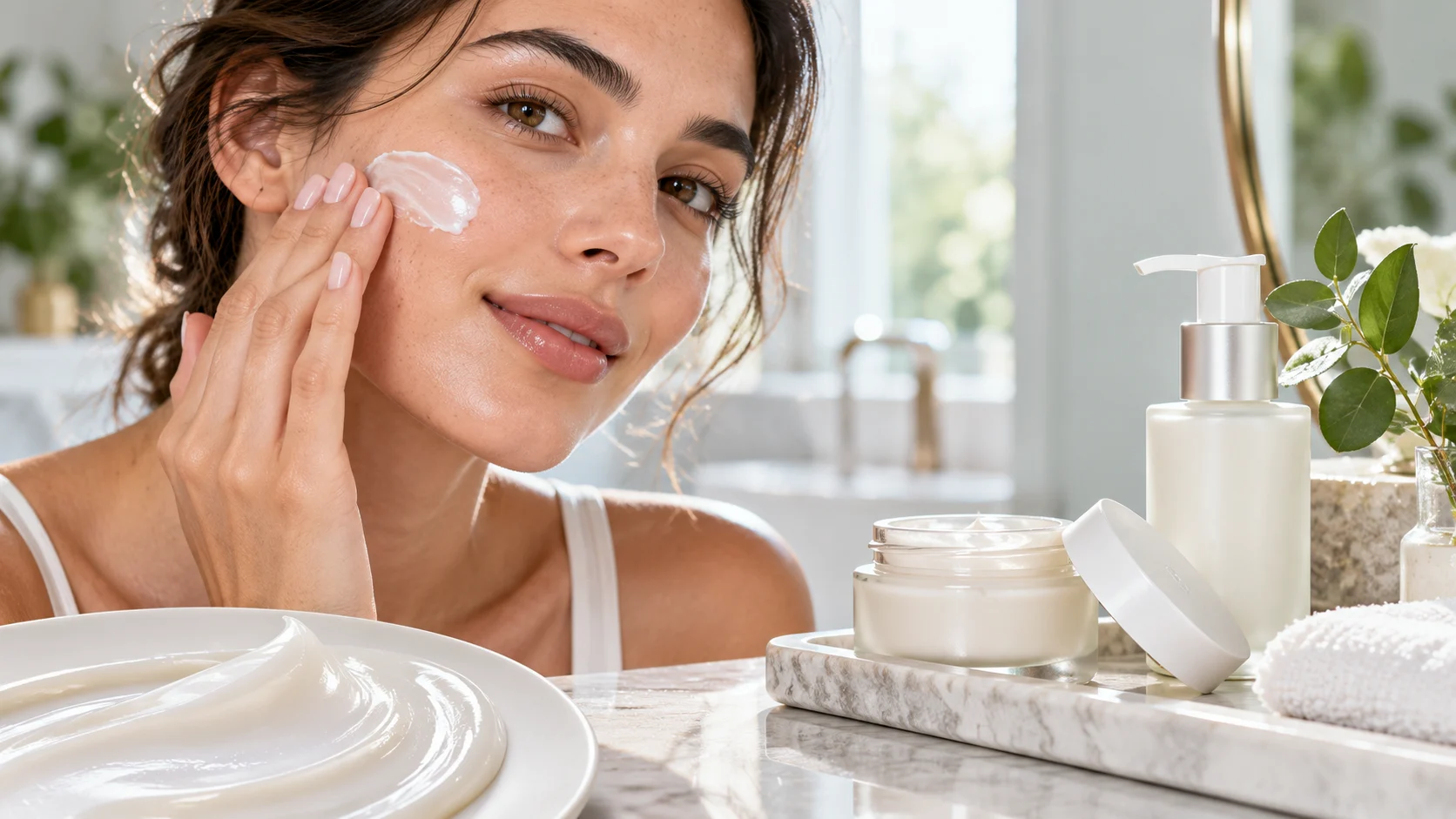

Dimethicone is a widely used skincare ingredient found in moisturizers, primers, sunscreens, conditioners, and various cosmetic products. Known for its smooth texture and ability to form a protective layer over the skin, dimethicone helps improve moisture retention and reduce dryness. It is particularly popular in formulations designed for sensitive, dry, or irritated skin.
Despite its widespread use, many people wonder whether dimethicone is safe for skin, whether it clogs pores, and how it compares with natural moisturizing ingredients. Some skincare advertisements describe silicones as harmful, while others promote dimethicone as an essential protective ingredient. Understanding the science behind these claims can help separate established benefits from common misconceptions.
This guide explores what dimethicone is, how it works, its skincare benefits, possible side effects, and whether it is suitable for different skin types. It also explains how to identify dimethicone in product labels and incorporate it into a practical skincare routine.
What Is Dimethicone?
Dimethicone, also called polydimethylsiloxane, is a silicone-based polymer commonly used in skincare, cosmetics, and personal care products. It consists of repeating silicon-oxygen units with attached organic groups, creating a flexible material with distinctive physical properties. Depending on its molecular structure, dimethicone can range from a light fluid to a thicker substance. Manufacturers use these variations to create different product textures.
In skincare, dimethicone is primarily valued for its protective and conditioning properties. It spreads easily across the skin and creates a smooth, flexible film that helps limit moisture loss. This protective layer can make rough or dry areas feel softer. It also improves the application and texture of many cosmetic products.
Dimethicone is a synthetic ingredient, but synthetic does not automatically mean unsafe. Its safety depends on the formulation, intended use, and available scientific evidence. Dimethicone has a long history of use in topical skincare products. It is also recognized as an active skin protectant ingredient in certain over-the-counter products in the United States.
How Does Dimethicone Work on the Skin?
Dimethicone works primarily by forming a thin protective film over the skin’s surface. This film helps reduce transepidermal water loss, which occurs when moisture naturally evaporates through the outer skin layers. By limiting excessive water loss, dimethicone supports skin hydration. Its protective effect is particularly useful when the skin feels dry or uncomfortable.
Unlike ingredients that primarily attract water, dimethicone functions mainly as an emollient and protective barrier-forming agent. It can make the skin feel smoother by filling small irregularities on its surface. This creates the silky sensation commonly associated with silicone-based skincare products. The effect is physical rather than dependent on deep penetration into the skin.
Dimethicone is often combined with humectants such as glycerin and hyaluronic acid. Humectants help attract water, while dimethicone can reduce moisture loss from the skin’s surface. These ingredients perform complementary functions. A well-formulated moisturizer may therefore provide more complete hydration than a product relying on one ingredient alone.
Dimethicone Benefits for Skin Hydration
One of the most important dimethicone benefits is its ability to help maintain skin hydration. The outer skin barrier naturally regulates moisture loss, but environmental conditions and frequent washing can increase dryness. Dimethicone forms a protective layer that reduces this process. As a result, the skin may feel softer and more comfortable.
Dimethicone is frequently included in moisturizing creams, lotions, and barrier products. It can improve how these formulations spread while helping retain moisture. Unlike some heavy ointments, certain dimethicone formulations feel relatively lightweight. However, the overall texture depends on the concentration and other ingredients used in the product.
For people experiencing persistent dry skin, dimethicone can be a useful moisturizing ingredient. It works particularly well alongside substances that help replenish or attract moisture. Regular application of a suitable moisturizer supports normal skin comfort. However, severe dryness or persistent inflammation may require professional dermatological assessment.
Is Dimethicone Safe for Skin?
Dimethicone is generally considered safe for topical cosmetic use when formulated and used appropriately. Its safety has been evaluated in cosmetic ingredient assessments, and it has a long history of use in personal care products. It is also included in regulated skin protectant preparations. These applications support its established role in skincare.
Because dimethicone largely remains on the skin’s surface, systemic absorption through intact skin is generally limited. Its chemical stability also contributes to its usefulness in topical formulations. However, the safety of a complete skincare product depends on all its ingredients. Fragrances, preservatives, and other substances may influence individual tolerance.
Most people can use dimethicone-containing moisturizers without significant problems. Nevertheless, occasional irritation or sensitivity can occur, particularly with complex cosmetic formulations. A product causing persistent redness, itching, or discomfort should be discontinued. Safe skincare involves choosing appropriate products and paying attention to individual reactions.
Dimethicone Benefits for Dry Skin
Dry skin develops when the outer skin layers lose moisture or fail to maintain an effective protective barrier. Common contributing factors include cold weather, low humidity, frequent washing, and certain skin conditions. Dimethicone helps reduce surface moisture loss, making it useful in products designed for dryness. Its smooth texture can also improve the feeling of rough skin.
Many moisturizers combine dimethicone with glycerin, ceramides, and other barrier-supporting ingredients. These combinations can address different aspects of dryness. Dimethicone primarily helps protect the surface, while other ingredients may contribute additional hydration or replenish skin lipids. The complete formulation determines how effectively a product supports dry skin.
For mild dryness, a suitable dimethicone-based moisturizer may improve comfort with regular use. Applying moisturizer after gentle cleansing can help maintain hydration. However, severely cracked, painful, or inflamed skin may require more intensive care. Persistent symptoms should not be managed solely through cosmetic products without appropriate assessment.
Is Dimethicone Good for Sensitive Skin?
Dimethicone is frequently used in products marketed for sensitive skin because it is generally well tolerated. Its protective film can reduce direct exposure to certain environmental irritants and help limit moisture loss. These characteristics make it valuable in gentle moisturizers. However, not every product containing dimethicone is automatically suitable for sensitive individuals.
Sensitive skin may react to fragrances, alcohol, preservatives, botanical extracts, or other formulation components. Dimethicone itself is not a common cause of allergic contact dermatitis, but individual reactions remain possible. Looking for fragrance-free products with straightforward ingredient lists may reduce some risks. Patch testing can also help identify personal sensitivity.
People with persistent irritation should avoid repeatedly experimenting with unfamiliar skincare products. A simple routine using gentle cleansers and suitable moisturizers may be more comfortable. Dimethicone can be one helpful ingredient within that routine. However, diagnosed skin conditions may require specific medical treatments rather than ordinary cosmetic products.
Does Dimethicone Clog Pores?
A common concern is whether dimethicone clogs pores or contributes to acne. Dimethicone is generally regarded as non-comedogenic in many skincare applications, meaning it is not commonly associated with blocking pores. Its film-forming properties do not automatically create comedones. However, the behavior of a finished product depends on its entire formulation.
Acne develops through several processes, including excess sebum production, changes in follicular cell turnover, inflammation, and microbial activity. Dimethicone does not necessarily trigger these processes. Nevertheless, some people may find particular silicone-containing products uncomfortable or notice breakouts after using them. Such reactions may involve other ingredients or individual skin characteristics.
People with acne-prone skin can choose lightweight, non-comedogenic moisturizers that suit their needs. A product containing dimethicone does not need to be avoided solely because it contains silicone. If breakouts or irritation develop, reviewing the complete formulation is more useful. Persistent acne may require evidence-based treatment and professional guidance.
Dimethicone and Skin Barrier Protection
The skin barrier is the outer protective system that helps retain moisture and limit exposure to environmental substances. When this barrier becomes disrupted, dryness, irritation, and sensitivity may increase. Dimethicone supports barrier function by forming a protective surface layer. This reduces moisture loss without necessarily changing the underlying structure of the skin.
Dimethicone is especially useful in products intended for areas exposed to repeated friction or moisture. Its protective characteristics can help improve comfort and reduce certain external irritants. However, it should not be considered a cure for every form of barrier damage. Different conditions require different treatment strategies.
Maintaining healthy skin involves gentle cleansing, appropriate moisturization, and protection from excessive environmental exposure. Dimethicone may complement these practices when included in a well-formulated product. People with severe barrier disruption, infections, or persistent dermatitis need medical assessment. Protective skincare and medical treatment serve different purposes.
Dimethicone for Eczema-Prone Skin
Eczema, particularly atopic dermatitis, is associated with skin barrier disruption and recurring inflammation. Moisturizers are an important part of supportive skincare for people managing this condition. Dimethicone may help reduce moisture loss and improve the feeling of dryness. Its inclusion in moisturizers can therefore be useful for some individuals.
However, dimethicone does not directly replace prescribed treatments used to control eczema inflammation. Products containing it may provide barrier support, but their overall suitability depends on the formulation. Fragrance-free creams and ointments are often preferred for sensitive skin. Individual responses vary, especially during active flare-ups.
Persistent itching, swelling, cracked skin, or signs of infection require appropriate medical care. A dermatologist can recommend treatments suited to the severity of eczema. Dimethicone-containing moisturizers may complement these plans when tolerated. They should not be treated as standalone cures for chronic inflammatory skin conditions.
Dimethicone for Irritated and Chafed Skin
Skin irritation can develop when repeated friction affects areas such as the thighs, underarms, or skin folds. Moisture and movement may increase discomfort. Dimethicone-based skin protectants can form a smooth layer that helps reduce friction and moisture-related irritation. This makes them useful in certain protective skincare applications.
Some barrier creams use dimethicone to help protect skin exposed to prolonged moisture. These products may be used in situations involving mild irritation from wetness or rubbing. However, product indications vary. A cosmetic moisturizer should not automatically be considered equivalent to a regulated skin protectant treatment.
Keeping irritated areas appropriately clean and dry can complement protective skincare. Avoiding harsh cleansers and unnecessary rubbing may also improve comfort. Persistent pain, broken skin, or signs of infection require professional evaluation. Dimethicone can help protect the surface but cannot treat every underlying cause of irritation.
Dimethicone in Moisturizers and Lotions
Dimethicone is commonly included in facial moisturizers, body lotions, and hand creams. It improves product spreadability and creates a smooth finish after application. Manufacturers value its ability to enhance texture without necessarily making formulations feel excessively greasy. These properties contribute to its popularity in everyday skincare.
Different moisturizers contain varying concentrations and forms of dimethicone. Lightweight lotions may use it to create a silky finish, while richer creams combine it with additional emollients and occlusive ingredients. The result depends on the entire formulation. A higher concentration does not automatically mean a product provides better hydration for everyone.
When choosing a moisturizer, consider skin type, climate, and personal preferences. Ingredients such as glycerin, ceramides, petrolatum, and dimethicone may serve complementary roles. The best product is one that provides comfortable hydration without causing irritation. There is no need to prioritize a single ingredient over the overall formulation.
Why Dimethicone Is Used in Makeup Primers
Dimethicone is widely used in makeup primers because it creates a smooth surface for cosmetic application. Its silky texture can temporarily reduce the appearance of uneven skin texture. This helps foundation and other makeup products spread more evenly. The effect is cosmetic rather than a permanent change in skin structure.
Silicone-based primers may also improve how makeup sits on the skin throughout the day. Their film-forming characteristics can influence product adherence and texture. However, performance depends on the primer’s complete ingredient combination. Different formulations may produce matte, satin, or more moisturizing finishes.
People with sensitive or acne-prone skin should evaluate primers according to personal tolerance. Dimethicone itself is generally well tolerated, but other ingredients may cause irritation. Proper makeup removal and gentle cleansing are also important. A primer should enhance cosmetic application without replacing basic skincare practices.
Dimethicone in Sunscreen Products
Dimethicone is included in some sunscreen formulations to improve spreadability, skin feel, and product consistency. It can help create a smooth layer across the skin. However, dimethicone itself is not an approved ultraviolet sunscreen filter. Its presence does not establish that a product provides sun protection.
Effective sunscreens rely on specific UV-filtering ingredients that are evaluated for their protective performance. The sun protection factor, commonly called SPF, reflects testing of the complete sunscreen formulation. Dimethicone may support the product’s texture but does not replace active sunscreen ingredients. Reading the label helps identify the intended protection.
Regular sun protection is important for reducing ultraviolet-related skin damage. Broad-spectrum sunscreen, suitable clothing, and shade can contribute to safer outdoor habits. Dimethicone-containing sunscreens may be comfortable options when properly formulated. Their effectiveness depends on the complete tested product rather than one supporting ingredient.
Dimethicone vs. Hyaluronic Acid
Dimethicone and hyaluronic acid are both common moisturizing ingredients, but they perform different functions. Hyaluronic acid acts mainly as a humectant, attracting and holding water. Dimethicone primarily forms a protective film that helps reduce moisture loss. These functions can complement each other within a skincare formulation.
A moisturizer containing hyaluronic acid may help increase surface hydration, while dimethicone can support moisture retention. Combining both ingredients may create a comfortable moisturizing product. However, effectiveness depends on concentration, formulation, and environmental conditions. Neither ingredient is automatically superior for every skin type.
People with very dry skin may benefit from products combining humectants, emollients, and protective ingredients. Lightweight formulations may suit those who prefer less residue. Selecting skincare products should focus on comfort and skin needs. Marketing comparisons that declare one ingredient universally better often overlook these differences.
Dimethicone vs. Petrolatum
Dimethicone and petrolatum are both used to help protect skin and reduce moisture loss. Petrolatum is a highly occlusive ingredient commonly found in ointments and barrier products. Dimethicone also provides protective properties but often feels lighter and silkier. Their differences influence how manufacturers use them in skincare.
Petrolatum can be particularly useful for very dry areas because it creates a strong moisture-retaining barrier. Dimethicone may be preferred in products designed for a smoother, less greasy finish. Some formulations combine the two to balance protection and texture. The appropriate choice depends on the intended use.
Neither ingredient should automatically be considered better in every situation. Skin condition, climate, product consistency, and personal preferences all matter. For severe dryness, richer protective products may provide greater comfort. A dermatologist can recommend appropriate options when ordinary moisturizers are insufficient.
Is Dimethicone a Silicone?
Yes, dimethicone belongs to a group of synthetic substances commonly known as silicones. Silicones are polymers containing repeating silicon-oxygen structures. They are widely used in cosmetics because they can provide smooth textures, flexibility, and water-resistant characteristics. Different silicones have different chemical structures and physical properties.
Dimethicone is not the same substance as elemental silicon, which is a chemical element. It is also different from silica, a compound used in various cosmetic and industrial applications. Confusing these materials can lead to misunderstandings about their properties. Ingredient safety should be assessed according to the specific substance and intended exposure.
The presence of silicone in skincare does not automatically indicate a harmful formulation. Dimethicone has been studied and widely used in topical products for many years. However, individual sensitivity and the complete product composition remain relevant. Scientific evidence provides a more reliable basis for evaluation than broad claims about synthetic ingredients.
Is Dimethicone Natural or Synthetic?
Dimethicone is a synthetic polymer manufactured through controlled chemical processes. Its production allows manufacturers to create materials with predictable texture and performance. Although it is not directly extracted from plants, its synthetic origin does not determine whether it is safe. Natural and manufactured ingredients both require appropriate safety evaluation.
Some skincare brands promote silicone-free products because of texture preferences or marketing positioning. Choosing such products is a personal decision. However, claims that every synthetic ingredient damages the skin are scientifically misleading. Many widely used dermatological products contain carefully evaluated synthetic substances.
The most important considerations are ingredient quality, concentration, formulation, and individual tolerance. A naturally derived ingredient can cause allergies, while a synthetic ingredient may be well tolerated. Product selection should therefore rely on reliable information rather than assumptions about origin. Dimethicone’s established skincare applications reflect its useful physical properties.
Can Dimethicone Cause Side Effects?
Dimethicone is generally considered low-risk when used topically in appropriate formulations. However, some people may experience redness, itching, burning, or discomfort after applying products containing it. These symptoms may result from dimethicone or other formulation ingredients. Individual reactions can vary considerably.
Complex skincare products often contain fragrances, preservatives, botanical extracts, and additional cosmetic substances. Any of these ingredients may contribute to irritation. Determining the cause can require careful review or professional assessment. A reaction to one product does not necessarily mean every dimethicone-containing formulation will cause the same problem.
Persistent irritation should prompt discontinuation of the product and appropriate medical advice. Severe swelling, widespread rash, or breathing difficulties require urgent attention. Patch testing unfamiliar products can help identify sensitivity before widespread use. Skincare should support comfort rather than create continuing irritation.
How to Use Dimethicone Products in a Skincare Routine
Dimethicone is usually encountered as an ingredient within moisturizers, lotions, sunscreens, or makeup products. The correct application method depends on the specific formulation. Follow the manufacturer’s directions rather than attempting to use concentrated raw ingredients. Finished skincare products are designed with appropriate textures and ingredient combinations.
For a simple skincare routine, gentle cleansing can be followed by a moisturizer suited to individual needs. A dimethicone-containing cream may help reduce moisture loss and improve skin comfort. During the daytime, appropriate sun protection is also important. Additional products should be introduced only when they serve a useful purpose.
People with sensitive skin may prefer uncomplicated, fragrance-free formulations. If a new product causes discomfort, discontinue use and evaluate the ingredients. Applying excessive quantities does not necessarily improve hydration. A consistent routine using suitable products is generally more beneficial than layering numerous unfamiliar ingredients.
Who Should Avoid Dimethicone Products?
Most people can tolerate dimethicone in appropriately formulated skincare products. However, individuals with a known reaction to a particular product should avoid continued exposure until the cause is understood. Sensitivity may involve dimethicone itself or another ingredient. A dermatologist can help clarify persistent or recurring reactions.
Products intended for ordinary cosmetic use should not automatically be applied to open wounds, severe burns, or infected skin. These situations may require specialized medical preparations. Certain regulated dimethicone skin protectants have specific indications, but they are not interchangeable with all cosmetic products. Following the intended use is essential.
People with chronic dermatological conditions should consider recommendations from their healthcare professionals. A product that suits one person may not be appropriate for another. Ingredient labels and formulation details provide useful guidance. Avoiding dimethicone is not generally necessary unless individual sensitivity or another specific reason exists.
How to Identify Dimethicone on Skincare Labels
Dimethicone usually appears under the name dimethicone in cosmetic ingredient lists. Some related silicone ingredients have different names, including cyclopentasiloxane, amodimethicone, and dimethiconol. These substances are not identical, although they belong to the broader silicone family. Their properties and intended functions may differ.
Ingredient lists help consumers identify the substances used in a product. However, they do not always reveal exact concentrations or explain the complete formulation’s behavior. A product containing dimethicone may feel lightweight, rich, matte, or silky depending on other ingredients. Personal experience and product purpose remain important.
People comparing skincare products should evaluate moisturizing ingredients, fragrances, preservatives, and intended skin types. Claims such as silicone-free or dermatologist-tested may provide limited information without additional context. A reliable product should have clear labeling and appropriate usage instructions. Overall formulation quality matters more than the presence or absence of one ingredient.
Conclusion
Dimethicone is a widely used silicone-based skincare ingredient valued for its protective, moisturizing, and texture-enhancing properties. It helps reduce moisture loss by forming a flexible layer on the skin’s surface. This makes it useful in moisturizers, barrier creams, primers, and other cosmetic formulations. Its lightweight feel and stability contribute to its popularity.
Scientific evidence and extensive topical use support dimethicone’s general safety when appropriately formulated. It is not inherently harmful because it is synthetic, and it is not commonly associated with clogged pores. However, individual reactions can occur, and the complete product formulation determines suitability. Skin sensitivity should always be considered.
Dimethicone can be a practical ingredient for people seeking comfortable hydration and skin barrier support. Choosing fragrance-free products when appropriate, following application instructions, and maintaining a simple skincare routine can help reduce irritation. Rather than avoiding silicones based on marketing claims, consumers benefit from understanding how dimethicone works and whether a particular product meets their needs.
Frequently Asked Questions (FAQs)
Is Dimethicone Safe for Your Face?
Yes, dimethicone is generally considered safe for facial skincare when used in appropriate formulations. It helps reduce moisture loss and improve product texture, although individual irritation can occasionally occur.
Does Dimethicone Clog Pores or Cause Acne?
Dimethicone is generally considered non-comedogenic and is not commonly associated with clogged pores. However, breakouts can depend on the complete product formulation and individual skin characteristics.
Is Dimethicone Good for Dry Skin?
Yes, dimethicone can help reduce moisture loss and improve skin comfort. It is commonly combined with humectants and other moisturizing ingredients to support hydration and normal barrier function.
Is Dimethicone Better Than Hyaluronic Acid?
Neither ingredient is universally better. Hyaluronic acid primarily attracts water, while dimethicone helps reduce moisture loss. They often work well together in moisturizing products designed for different skin needs.
Can You Use Dimethicone Every Day?
Dimethicone-containing skincare products can generally be used daily when appropriate and well tolerated. Follow the specific product instructions and discontinue use if persistent redness, itching, or irritation develops.