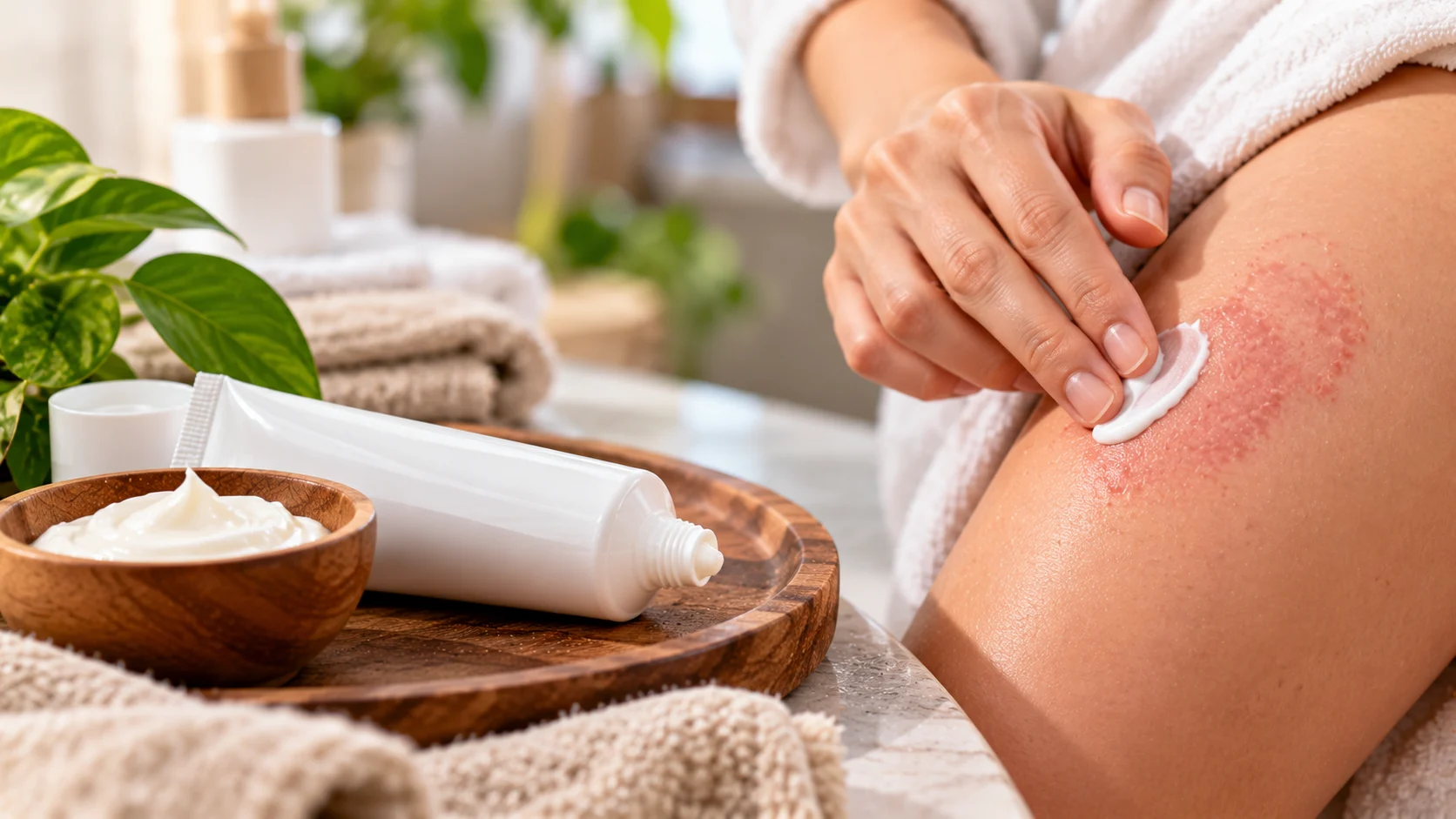

Nystatin cream is a topical antifungal medication commonly prescribed to treat certain yeast infections affecting the skin. It works against susceptible Candida species, which can cause uncomfortable rashes in warm, moist areas of the body. When used for an appropriately diagnosed infection, nystatin cream can help control fungal growth and allow irritated skin to recover.
Although nystatin cream is widely used, it is not effective against every type of fungal infection. Conditions such as ringworm and athlete’s foot are usually caused by dermatophytes, which do not respond to nystatin. Understanding this difference is important because choosing an unsuitable treatment can allow symptoms to persist or worsen.
This guide explains nystatin cream uses, how the medication works, general application directions, possible side effects, and important precautions. It also discusses when medical assessment is necessary and how to distinguish common yeast-related skin problems from conditions that require different treatments.
What Is Nystatin Cream?
Nystatin cream is a topical prescription antifungal medication belonging to the polyene group of antifungal drugs. It contains nystatin, an active ingredient that targets susceptible yeast organisms, particularly Candida species. The medication is applied to affected skin rather than taken by mouth. Its purpose is to treat superficial fungal infections diagnosed as appropriate for this medication.
Nystatin was developed from substances originally isolated from certain Streptomyces bacteria. It has been used in medicine for decades and remains an established treatment for selected Candida infections. Different nystatin formulations are available, including creams, ointments, powders, and oral preparations. These products are not interchangeable because they are designed for different sites and conditions.
Nystatin cream should be used according to the prescription and product instructions. The exact formulation may contain additional ingredients that influence its texture and skin compatibility. Some combination products include other active medicines and require different precautions. Identifying the specific product helps avoid confusion between ordinary nystatin cream and combination treatments.
How Does Nystatin Cream Work?
Nystatin works by binding to ergosterol, a substance found in the cell membranes of susceptible fungi. This interaction disrupts normal membrane function and can cause essential cellular contents to leak. As a result, fungal cells become damaged. This mechanism helps explain why nystatin can treat particular yeast infections when the organisms are susceptible.
The medication is mainly active against Candida and certain other yeasts. It is not reliably effective against dermatophytes, the fungi responsible for common conditions such as athlete’s foot and ringworm. These infections require different antifungal medicines. A rash that looks fungal is not enough to determine which treatment will work.
When applied to intact skin, nystatin generally has minimal absorption into the bloodstream. Its activity therefore remains concentrated at the application site. However, minimal absorption does not eliminate the possibility of local irritation or allergic reactions. Proper diagnosis and appropriate use are essential for achieving the intended treatment benefits.
What Is Nystatin Cream Used For?
The primary use of nystatin cream is treating cutaneous candidiasis, a yeast infection affecting the skin. Candida organisms naturally occur on parts of the human body but can cause problems when conditions favor excessive growth. Warmth, moisture, friction, and certain health conditions may contribute. Nystatin helps control susceptible yeast at the affected site.
Skin yeast infections may develop in folds beneath the breasts, around the groin, between certain skin surfaces, or in other moist areas. Symptoms can include redness, itching, tenderness, and irritation. However, similar symptoms can occur with bacterial infections, eczema, and other conditions. Medical assessment helps determine whether nystatin is appropriate.
Nystatin cream may also be prescribed for some Candida-related rashes associated with prolonged moisture exposure. Its effectiveness depends on the underlying organism rather than the appearance of the rash alone. It should not be used indiscriminately for every itchy or red patch. Persistent or unusual symptoms require reassessment.
Nystatin Cream for Yeast Infections on the Skin
Cutaneous yeast infections occur when Candida organisms multiply in conditions that support their growth. Moist environments and skin folds are particularly susceptible because sweat and friction can affect the skin barrier. The resulting rash may feel irritated or uncomfortable. Nystatin cream is one recognized treatment when Candida is responsible.
A clinician may identify the infection through examination and, when necessary, testing of a skin sample. This matters because several different conditions can resemble candidiasis. Treating a bacterial rash or inflammatory skin condition with nystatin alone may provide little benefit. Accurate diagnosis helps reduce unnecessary medication use.
Successful treatment also involves addressing contributing factors when possible. Keeping affected areas appropriately clean and dry may help reduce excessive moisture. However, aggressive washing and harsh skincare products can worsen irritation. Supportive care should complement prescribed antifungal treatment rather than replace it.
Nystatin Cream for Candida-Related Skin Fold Rashes
Intertrigo describes inflammation that develops where skin surfaces rub together, often in areas exposed to moisture and heat. Candida can sometimes contribute to or complicate this condition. When yeast infection is confirmed or strongly suspected, a clinician may prescribe nystatin cream. Not every case of intertrigo requires an antifungal medication.
Skin fold rashes may occur under the breasts, in abdominal folds, or around the groin. Symptoms can include redness, tenderness, itching, and uncomfortable moisture. Other organisms or noninfectious irritation may produce similar findings. The location alone cannot establish whether Candida is present.
Managing skin fold irritation may involve reducing prolonged moisture and friction while following medical instructions. Gentle cleansing and thoroughly drying the area can support skin comfort. Avoid harsh products that further damage sensitive tissue. If symptoms continue despite treatment, the diagnosis and treatment plan may need reassessment.
Is Nystatin Cream Used for Diaper Rash?
Some diaper rashes involve Candida yeast, particularly when irritation persists in a warm and moist environment. Nystatin may be prescribed when a healthcare professional identifies a yeast-related diaper rash. However, many diaper rashes result from ordinary irritation rather than fungal infection. These conditions require different management approaches.
Signs of Candida-related diaper dermatitis can include a prominent red rash involving skin folds and smaller surrounding spots. Nevertheless, appearance alone is not always sufficient for diagnosis. Pediatric healthcare professionals can determine whether antifungal treatment is necessary. Nystatin cream should not automatically be applied to every diaper rash.
Gentle skin care, appropriate diaper changes, and suitable barrier products are important for managing diaper-area irritation. Medical instructions should determine how prescribed medication fits into that routine. Combination products and additional creams may require specific guidance. Persistent or worsening rash in an infant deserves prompt professional evaluation.
Can Nystatin Cream Treat Ringworm or Athlete’s Foot?
Nystatin cream is not an appropriate treatment for typical ringworm because ringworm is usually caused by dermatophyte fungi. These organisms differ from Candida yeast and generally do not respond to nystatin. Using the wrong medication may delay recovery. A confirmed dermatophyte infection requires an antifungal effective against that particular group.
Athlete’s foot is another common dermatophyte infection, usually affecting the skin between the toes or on the feet. Although it may cause itching, peeling, and redness, nystatin is not generally effective against it. Symptoms can also resemble eczema or other conditions. Accurate identification guides appropriate treatment.
The same distinction applies to many cases of fungal jock itch. Candida can affect the groin, but classic tinea cruris is usually caused by dermatophytes. These conditions require different treatments despite occurring in similar locations. A healthcare professional can help distinguish them when symptoms are unclear.
How to Apply Nystatin Cream Correctly
Nystatin cream is intended for external skin application according to the prescribing clinician’s directions. General product instructions typically involve gently cleaning and drying the affected area before applying the medication. The amount and frequency depend on the prescription and formulation. It should not be used more often simply because symptoms are uncomfortable.
The medication should be applied only to the areas identified for treatment. Wash hands after handling the product unless the hands themselves are the treated area. Avoid accidental contact with the eyes. Nystatin skin cream is not intended for swallowing or for use inside the mouth.
Application instructions may differ when other prescribed creams or protective products are involved. Follow the clinician’s directions rather than layering several treatments without guidance. Covering the affected area tightly may also be inappropriate unless specifically advised. The goal is to use the medicine correctly while minimizing unnecessary irritation.
How Often Is Nystatin Cream Applied?
The application schedule for nystatin cream depends on the product label and the healthcare professional’s instructions. Many conventional preparations are prescribed for application twice daily, but individual directions may vary. This general information should not replace the instructions provided with a prescription. Using more medicine does not guarantee faster recovery.
Consistency matters because antifungal treatment must control the yeast responsible for the infection. Skipping applications or changing the treatment schedule independently may reduce effectiveness. However, persistent symptoms do not necessarily mean the amount should be increased. The original diagnosis may need to be reconsidered.
Children, adults with sensitive skin, and people with medical conditions may require individualized treatment plans. A pharmacist or prescribing clinician can explain unclear directions. It is important not to use someone else’s prescription. Different rashes may need different medicines even when their symptoms look similar.
How Long Does Nystatin Cream Take to Work?
The time required for improvement varies with the severity of the infection, affected area, and individual circumstances. Some symptoms may begin improving during the first several days of appropriate treatment. However, complete resolution can take longer. Visible improvement does not necessarily mean treatment should be stopped before the prescribed course is complete.
If the condition does not improve within the timeframe advised by the clinician, reassessment may be necessary. A persistent rash could involve an organism not susceptible to nystatin or a nonfungal skin condition. Additional moisture, friction, or irritation may also complicate recovery. Continuing ineffective treatment indefinitely is not appropriate.
Treatment duration should follow the prescription rather than a universal online schedule. Different formulations and diagnoses may require different approaches. People should avoid repeatedly restarting medication without professional assessment. Medical guidance is particularly important when symptoms spread, become painful, or recur frequently.
Common Side Effects of Nystatin Cream
Nystatin cream is generally well tolerated when used appropriately, but some people experience reactions at the application site. Possible side effects include mild burning, itching, redness, or skin irritation. These symptoms may result from the active ingredient or other components of the cream. Individual sensitivity can vary.
Some skin reactions may resemble the symptoms of the original infection. This can make it difficult to determine whether the condition is improving or the medication is causing irritation. New or worsening discomfort should be discussed with a healthcare professional. Continuing treatment despite significant irritation may not be appropriate.
Allergic reactions to nystatin or inactive ingredients are uncommon but possible. Symptoms may include a worsening rash, swelling, or hives. Severe allergic symptoms, particularly difficulty breathing or swelling involving the face or throat, require urgent medical attention. A suspected serious reaction should never be managed simply by applying additional cream.
Precautions Before Using Nystatin Cream
Before using nystatin cream, inform the prescribing clinician about any known medication allergies or previous reactions to antifungal products. This information helps identify potential safety concerns. The clinician should also know about other medications or topical treatments being used. Combination products may contain ingredients requiring additional precautions.
Nystatin skin cream is formulated for external use and should not be applied inside the eyes, mouth, or vagina. Other nystatin preparations exist for different types of Candida infections, but they are not interchangeable. Using an inappropriate formulation can create unnecessary risks. Always confirm the intended treatment location.
Pregnant or breastfeeding individuals should seek medical advice before using nystatin cream. Although absorption through intact skin is generally minimal, treatment decisions should reflect individual circumstances. People with extensive skin damage or unusual infections may also need additional assessment. Medical guidance helps determine whether a topical antifungal is appropriate.
Nystatin Cream vs. Other Antifungal Creams
Nystatin differs from antifungal ingredients such as clotrimazole, miconazole, and terbinafine. These medicines belong to different antifungal groups and have varying activity against yeast and dermatophytes. Nystatin is primarily used for susceptible Candida infections. The appropriate treatment depends on the organism responsible for the skin problem.
Clotrimazole and miconazole are commonly used for certain yeast infections and dermatophyte infections. Terbinafine is particularly effective against many dermatophytes responsible for athlete’s foot and ringworm. However, no single antifungal is ideal for every condition. Product selection should follow diagnosis rather than assumptions based on brand familiarity.
Some antifungal products also contain corticosteroids intended to reduce inflammation. These combination preparations require additional caution because inappropriate steroid use can worsen or disguise certain fungal infections. Ordinary nystatin cream does not contain a steroid unless one is specifically included in the formulation. Check the active ingredient list carefully.
Can Nystatin Cream Be Used on Sensitive Skin?
Sensitive skin may react more easily to medications, fragrances, preservatives, or other topical ingredients. Nystatin cream is generally designed for local application, but individual reactions can occur. People with existing irritation should follow their clinician’s instructions carefully. An antifungal should not be assumed to soothe every type of sensitive skin.
The skin barrier may already be compromised when a yeast infection causes inflammation. Harsh cleansers, vigorous rubbing, and unnecessary additional products can worsen discomfort. Gentle care may help protect affected areas during treatment. However, cleaning and moisturizing practices should not interfere with the prescribed medication.
If applying nystatin causes significant stinging, swelling, or a worsening rash, professional advice is appropriate. These symptoms may reflect sensitivity, an incorrect diagnosis, or another complication. Using additional creams without guidance may make the problem harder to assess. Treatment should address the underlying condition while protecting the skin.
What to Do if Nystatin Cream Does Not Work
A rash that does not improve with nystatin may have several possible explanations. The infection could involve a fungus that is not susceptible to the medication. Alternatively, the condition might be bacterial, inflammatory, or caused by irritation rather than Candida. An accurate diagnosis is essential for choosing appropriate treatment.
Persistent moisture, friction, or an underlying medical condition can also affect recovery. Some individuals experience recurrent Candida-related skin problems that require further evaluation. Repeated infections may be associated with contributing factors such as diabetes or immune-related conditions. However, recurrence alone does not establish any particular diagnosis.
If symptoms worsen or fail to improve as expected, contact the prescribing healthcare professional. Additional examination or testing may be necessary. Avoid repeatedly applying larger quantities or combining different treatments without medical guidance. A revised treatment plan may be more effective than continuing an unsuitable medication.
How to Store Nystatin Cream Safely
Nystatin cream should be stored according to the instructions on its packaging or pharmacy label. Many preparations are intended for controlled room-temperature storage, but requirements vary between manufacturers. Excessive heat, moisture, and unsuitable storage conditions can affect product quality. Always check the expiration date before use.
Keep the tube or container properly closed when not in use. Avoid allowing the applicator opening to contact contaminated surfaces. Clean handling helps reduce the possibility of introducing microorganisms into the product. Medication should also remain in its original labeled packaging to prevent confusion with other creams.
Store nystatin cream away from children and pets, even though it is intended for topical use. Do not share prescribed medication with another person. Expired or unwanted products should be discarded according to appropriate pharmacy guidance. Proper storage and handling help preserve quality throughout the recommended treatment period.
Conclusion
Nystatin cream is an established topical antifungal medication used primarily for susceptible Candida yeast infections affecting the skin. It may be prescribed for cutaneous candidiasis and certain yeast-related rashes in moist skin folds. However, it is not effective against common dermatophyte infections such as ringworm and athlete’s foot.
Correct use depends on an accurate diagnosis, following prescribed application directions, and completing the recommended treatment. Although nystatin is generally well tolerated, local irritation and allergic reactions are possible. Persistent or worsening symptoms require professional reassessment rather than simply increasing the amount applied.
Understanding nystatin cream uses, directions, and possible side effects helps support safer treatment decisions. Good skin hygiene and moisture management may complement medication when appropriate. Anyone uncertain about a rash or prescription should consult a qualified healthcare professional instead of using antifungal products without a clear diagnosis.
Frequently Asked Questions (FAQs)
What Is Nystatin Cream Mainly Used For?
Nystatin cream is primarily prescribed for Candida yeast infections affecting the skin. It may help treat certain yeast-related rashes in moist skin folds, but it is ineffective against common dermatophyte infections.
How Many Times a Day Should Nystatin Cream Be Applied?
Many conventional nystatin cream prescriptions involve twice-daily application, but instructions vary. Follow the schedule on your prescription label and ask a healthcare professional if the directions are unclear.
Can Nystatin Cream Treat Ringworm?
No. Ringworm is generally caused by dermatophyte fungi, which do not respond to nystatin. Appropriate treatment requires an antifungal effective against dermatophytes, selected according to the diagnosis.
How Long Does Nystatin Cream Take to Clear a Yeast Infection?
Some symptoms may improve within several days, but complete recovery depends on the infection and prescribed treatment duration. Persistent or worsening symptoms should be reassessed by a healthcare professional.
What Are the Most Common Side Effects of Nystatin Cream?
Possible side effects include mild burning, itching, redness, or irritation where the cream is applied. Severe allergic reactions are uncommon but require urgent medical attention.