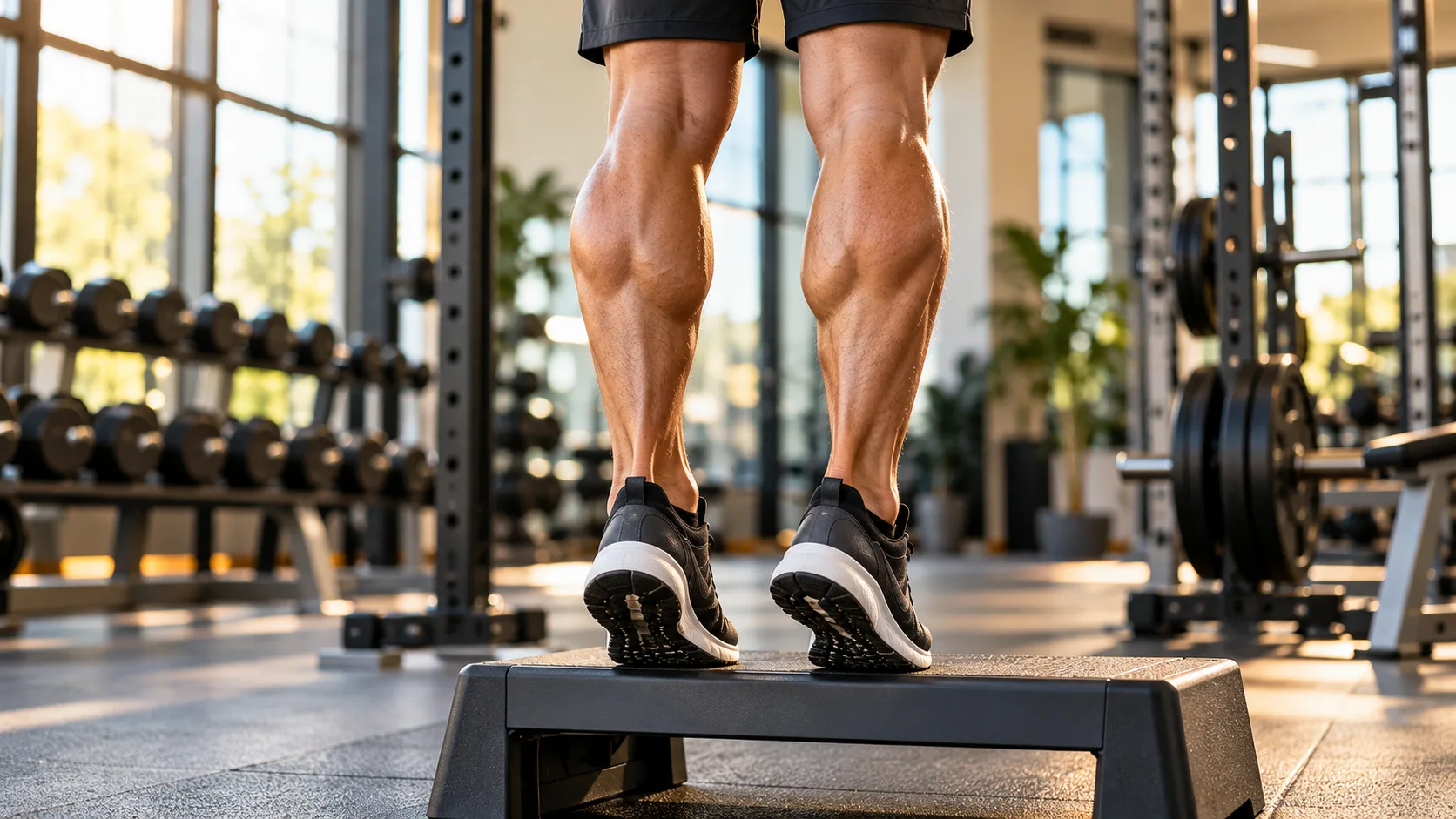

Calf raises are one of the simplest and most effective exercises for strengthening your lower legs. Whether you walk regularly, enjoy sports, or want better ankle stability, this movement can support everyday physical activities. The exercise requires minimal equipment, making it suitable for home workouts, gym sessions, and general lower-body fitness routines.
The calf raises exercise primarily targets the muscles at the back of your lower legs, including the gastrocnemius and soleus. These muscles help you walk, run, climb stairs, and maintain balance. When performed with proper technique, calf raises can improve muscular strength, endurance, and control while supporting comfortable movement throughout the day.
Understanding correct form is essential because small mistakes can reduce exercise effectiveness and place unnecessary stress on your ankles. This guide explains calf raise benefits, proper technique, common variations, and practical training recommendations. You will also learn how to avoid common mistakes and incorporate calf strengthening into a balanced exercise routine.
What Are Calf Raises and How Do They Work?
Calf raises are a lower-body strengthening exercise that involves lifting your heels off the ground while maintaining pressure through the front of your feet. The movement primarily uses the calf muscles to produce ankle plantar flexion. This action is similar to the motion your feet perform when walking, climbing stairs, or rising onto your toes.
The two main muscles involved are the gastrocnemius and soleus, which work together to support lower-leg movement. The gastrocnemius forms the visible upper portion of the calf and crosses both the knee and ankle joints. The soleus lies beneath it and plays an important role in maintaining posture and supporting activities that require prolonged standing.
Calf raises can be performed while standing, sitting, or using appropriate gym equipment. Different variations change the emphasis placed on individual muscles and the amount of resistance involved. Beginners often start with bodyweight standing calf raises because they require little equipment. As strength develops, exercises can gradually become more challenging while maintaining controlled movement.
Benefits of Calf Raises for Lower-Body Strength
One of the main benefits of calf raises is improved muscular strength in the lower legs. Strong calf muscles help produce force when your feet push against the ground. This function is important for walking, running, climbing stairs, and participating in various recreational activities. Regular strengthening can make these movements feel more controlled and efficient over time.
Calf raises can also improve muscular endurance, particularly when performed consistently at a comfortable intensity. The calf muscles remain active during many everyday tasks, including standing and walking. Strengthening them may help improve your ability to perform these activities without tiring as quickly. However, individual results depend on fitness level, exercise consistency, and overall physical health.
Another benefit is improved control around the ankle joint. The calf muscles contribute to ankle movement and work alongside other lower-leg muscles to support balance. Although calf raises alone cannot prevent every ankle injury, they can be a useful part of a comprehensive strengthening program. Combining them with mobility and balance exercises supports more complete lower-body conditioning.
How to Perform Standing Calf Raises Correctly
Standing calf raises are an excellent starting point for learning proper calf exercise technique. Begin by standing upright with your feet approximately hip-width apart and your weight evenly distributed. Keep your knees comfortably straight without forcing them backward. If balance is difficult, place one or both hands on a sturdy chair or another stable surface.
Slowly raise your heels away from the floor while keeping pressure through the balls of your feet. Move upward as far as you can comfortably control without allowing your ankles to roll inward or outward. Pause briefly at the highest comfortable position, then lower your heels gradually until your feet return to the starting position.
Focus on completing each repetition with smooth, controlled movement rather than rushing through the exercise. Keep your body upright and avoid leaning heavily on the support. Beginners can start with a few comfortable repetitions and increase gradually. If you experience sharp pain or unusual discomfort, stop the movement and seek appropriate guidance before continuing.
Seated Calf Raises for Soleus Muscle Strength
Seated calf raises are another useful variation that primarily emphasizes the soleus muscle. Because the knees remain bent during the exercise, the gastrocnemius contributes differently than it does during standing calf raises. This makes seated variations a valuable addition to a balanced lower-leg strengthening routine, especially when combined with exercises performed in a standing position.
To perform seated calf raises, sit upright in a stable chair with both feet flat on the floor. Keep your knees comfortably bent and position your feet approximately hip-width apart. Slowly lift your heels while maintaining contact between the balls of your feet and the ground. Lower your heels gently before repeating the movement.
Seated calf raises can be performed using bodyweight movement or suitable resistance when additional challenge becomes appropriate. Beginners should focus on maintaining a steady pace and comfortable ankle movement. Avoid pushing downward excessively through the knees or forcing the heels upward. This variation can support calf endurance and control without requiring full body-weight loading.
Single-Leg Calf Raises for Better Balance
Single-leg calf raises are a more challenging variation because one leg supports your body throughout the movement. This exercise increases the demand on the working calf muscles and requires greater balance. It can also help you become aware of differences in strength and control between your legs, which may be useful when planning balanced workouts.
Stand beside a sturdy support and place your weight on one foot. Lift the other foot slightly above the ground while keeping the standing knee comfortably straight. Slowly raise your heel, maintain your balance briefly, and lower it with control. Keep the ankle aligned and avoid leaning your upper body excessively to either side.
Begin with a small number of repetitions and keep one hand on the support whenever necessary. If the exercise feels unstable, return to regular standing calf raises until your balance improves. There is no need to rush toward more demanding variations. Developing steady movement and comfortable control is more important than completing difficult exercises before you are ready.
Common Calf Raise Mistakes to Avoid
One of the most common mistakes during calf raises is performing repetitions too quickly. Bouncing upward and dropping the heels can reduce muscular control and create unnecessary stress around the ankles. Instead, lift and lower your body gradually. Controlled repetitions make it easier to maintain good alignment and recognize when your muscles are becoming fatigued.
Another mistake involves allowing the ankles to roll inward or outward during the movement. This can shift pressure unevenly through the feet and make balancing more difficult. Keep your weight comfortably distributed across the forefoot and avoid forcing your feet into unnatural positions. Using a sturdy support can help maintain proper technique.
Some people also make the mistake of increasing resistance before developing consistent movement control. Adding weights or attempting difficult variations too early can contribute to excessive soreness or irritation. Start with manageable exercises and progress gradually. Proper form, appropriate recovery, and consistent practice are more beneficial than rushing to complete the hardest possible version.
How Many Calf Raises Should You Do?
The appropriate number of calf raises depends on your current fitness level, exercise experience, and goals. For beginners, one or two sets of approximately eight to twelve comfortable repetitions can provide a manageable starting point. The exact number is less important than maintaining proper technique and completing the movement without pain or excessive fatigue.
As your strength improves, you can gradually increase repetitions, introduce another set, or choose a slightly more challenging variation. Avoid changing several training factors at the same time because this can make it difficult to recognize how your body responds. A gradual approach gives your muscles and connective tissues time to adapt to increased activity.
Calf raises do not need to be performed every day to support progress. Two or three strengthening sessions per week may be appropriate for general fitness, depending on other activities and recovery. Remember that walking, running, and sports also place demands on your calves. Allowing sufficient rest between demanding sessions supports comfortable, sustainable training.
Calf Raises for Walking, Running, and Sports
The calf muscles play an important role in walking because they help propel your body forward as your foot leaves the ground. During running, these muscles contribute to force production and help manage repeated loading through the ankle. Calf raises strengthen muscles involved in these movements, making them useful within broader physical conditioning programs.
Athletes who participate in activities involving running or jumping often include calf exercises in their strength routines. The gastrocnemius and soleus contribute to ankle movement during rapid changes in direction and other dynamic actions. However, calf raises alone do not determine athletic performance. Strength, coordination, technique, and overall conditioning also influence how effectively the body moves.
For recreational exercisers, calf strengthening can complement regular walking, cycling, or other enjoyable physical activities. A balanced routine should also train the thighs, hips, and muscles surrounding the ankle. Building strength across different muscle groups helps support coordinated movement. Select exercises that match your abilities rather than copying demanding routines designed for experienced athletes.
How to Include Calf Raises in a Workout Routine
Calf raises can fit naturally into a lower-body workout without requiring a complicated training schedule. They can be performed after a comfortable warm-up alongside exercises such as bodyweight squats or other appropriate strength movements. Choose a variation that matches your current ability and allows smooth movement throughout the full comfortable range.
A simple beginner session might include standing calf raises followed by seated calf raises. Both exercises train the lower legs in slightly different positions, providing a balanced approach to calf strengthening. Begin with manageable repetitions and use stable support when necessary. The entire routine should feel controlled rather than exhausting or uncomfortable.
You can also combine calf strengthening with gentle ankle mobility and balance activities. This approach trains different aspects of lower-leg function rather than concentrating only on muscular strength. Avoid adding unnecessary exercises simply to make the session longer. A consistent routine with a few well-performed movements can be more useful than an overly complicated workout.
Best Practices for Safe and Effective Calf Raises
Start every calf-strengthening session with a brief warm-up to prepare your lower legs for movement. Comfortable walking or gentle ankle movements can help you transition into exercise. Begin with a controlled pace and pay attention to how your feet and ankles feel. Avoid forcing movements that create pain or unusual pressure.
Maintaining good posture is another important part of effective calf raise technique. Keep your shoulders relaxed, distribute your weight evenly, and avoid using sudden body movements to generate momentum. Breathe naturally throughout each repetition. Holding a stable surface can improve balance without reducing the benefits of practicing controlled movement.
Recovery and gradual progression are equally important for long-term improvement. Give your muscles time to adjust when introducing new exercises or increasing difficulty. Mild soreness may occur after unfamiliar activity, but sharp or worsening pain should not be ignored. If you have a recent calf injury, Achilles tendon problem, or persistent discomfort, consult a qualified healthcare professional before training.
Calf Raises vs Other Calf Exercises
Calf raises are not the only exercises that strengthen the lower legs, although they are among the most convenient options. Standing heel raises emphasize the calf muscles while requiring minimal equipment. Seated variations change the position of the knee and place greater emphasis on the soleus. These differences make both exercises useful within a balanced routine.
Resistance-band plantar flexion provides another way to exercise the calf muscles while sitting. Gentle stretching can complement strengthening by helping maintain a comfortable range of ankle movement. Walking on varied surfaces also challenges the lower legs naturally, although the intensity differs from structured strength training. Each activity supports different aspects of physical conditioning.
The best calf exercise depends on your ability, comfort, available equipment, and personal goals. Beginners may prefer supported standing calf raises, while experienced exercisers may benefit from carefully progressed variations. There is no need to perform every exercise in one session. Choosing a few suitable movements and practicing them consistently provides a practical foundation for lower-leg fitness.
Conclusion
Calf raises are a simple and effective exercise for strengthening the muscles at the back of your lower legs. They primarily target the gastrocnemius and soleus, which support walking, running, ankle movement, and everyday physical activities. Standing, seated, and single-leg variations allow the movement to be adapted to different experience levels and abilities.
The most important part of performing calf raises is maintaining controlled technique. Keep your ankles aligned, avoid bouncing, and select a comfortable range of movement. Beginners should start with manageable repetitions and increase difficulty gradually. Combining calf raises with other lower-body exercises can help develop balanced strength, coordination, and muscular endurance.
Whether you are exercising at home or in a gym, consistency matters more than completing difficult variations. Choose appropriate exercises, allow adequate recovery, and pay attention to your body’s response. With sensible progression and good form, calf raises can become a useful part of a comfortable and sustainable lower-body fitness routine.
Frequently Asked Questions
What muscles do calf raises work?
Calf raises primarily strengthen the gastrocnemius and soleus muscles at the back of the lower legs. These muscles work together to support ankle plantar flexion, walking, running, and everyday movements.
How many calf raises should beginners do?
Beginners can start with one or two sets of approximately eight to twelve comfortable repetitions. Focus on controlled technique and gradually increase the number of repetitions as strength and confidence improve.
Are standing or seated calf raises better?
Both exercises are useful for different purposes. Standing calf raises emphasize the gastrocnemius, while seated variations place greater emphasis on the soleus. Including both can support more balanced calf strengthening.
Can calf raises improve ankle stability?
Calf raises can support ankle control by strengthening muscles involved in lower-leg movement. However, effective ankle stability also depends on balance, coordination, mobility, and the strength of surrounding muscles.
Should you do calf raises every day?
Daily calf raises are not necessary for most general strengthening routines. Two or three sessions per week may be sufficient, depending on activity level, exercise intensity, and recovery needs.