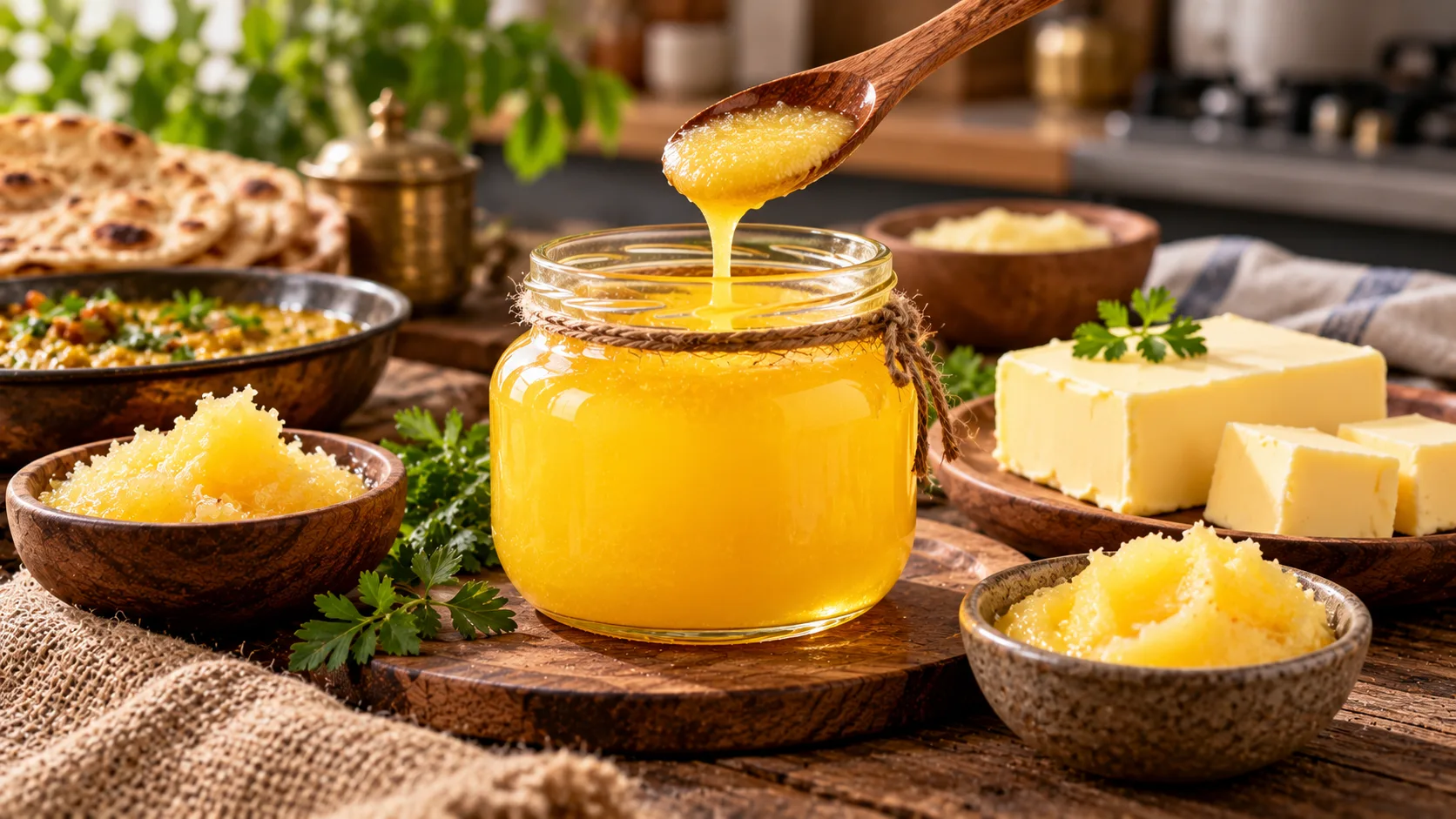

Ghee is a traditional cooking fat known for its rich, nutty flavor, golden color, and importance in South Asian cuisine. Made by heating butter to remove most of its water and milk solids, ghee has been used for centuries in everyday cooking, traditional recipes, and cultural practices. Its concentrated fat content and distinctive flavor make it a popular ingredient in both savory and sweet dishes.
Many people wonder whether ghee is healthier than regular butter, particularly because it contains certain fatty acids and small amounts of fat-soluble vitamins. Although ghee offers practical cooking advantages, it is also high in saturated fat and calories. Understanding these characteristics helps separate its genuine nutritional properties from exaggerated health claims.
This guide explains what ghee is, how it is made, its nutritional composition, potential benefits, common cooking uses, and important differences between ghee and butter. It also explores possible side effects and how ghee can fit into a balanced diet.
What Is Ghee?
Ghee is a type of clarified butter produced by heating butter until most of its moisture evaporates and the milk solids separate from the fat. The solids are then removed, leaving a concentrated golden cooking fat. This process creates the distinctive aroma, flavor, and texture associated with traditional ghee. It is especially common in Indian, Pakistani, and other South Asian cuisines.
Although ghee and clarified butter are closely related, their preparation can differ slightly. Traditional ghee is often heated longer, allowing the milk solids to develop a toasted flavor before removal. This additional cooking contributes to its characteristic nutty aroma. Clarified butter is typically prepared with less browning, resulting in a milder flavor.
Ghee can be made from butter produced using cow’s milk or buffalo milk. The final color, taste, and texture may vary according to the milk source and production method. Commercial products are widely available, while homemade ghee remains common in many households. Both forms are primarily composed of milk fat.
How Is Ghee Made?
Traditional ghee preparation begins with butter, which contains fat, water, and milk solids. The butter is heated gently so that its water gradually evaporates. As heating continues, the milk proteins and other solids separate from the liquid fat. These solids eventually settle or become visible within the mixture.
When the remaining milk solids develop a lightly toasted appearance, the fat gains its characteristic aroma. The liquid is then carefully strained to remove the solids. This produces the clear, golden fat commonly recognized as ghee. Proper temperature control is important because excessive heating can burn the solids and create an unpleasant flavor.
Commercial manufacturers use controlled production methods to maintain consistent quality and composition. Some products are prepared using traditional techniques, while others involve industrial clarification processes. The resulting fat is packaged for cooking and storage. Regardless of the method, the finished product should contain very little moisture and only trace amounts of milk components.
Ghee Nutrition Facts and Nutritional Value
Ghee is almost entirely fat, making it an energy-dense cooking ingredient. One tablespoon generally provides approximately 120 to 130 calories and around 14 grams of fat. Most of this fat consists of saturated and monounsaturated fatty acids. The exact composition depends on the milk source, manufacturing process, and product formulation.
Ghee contains small amounts of fat-soluble vitamins, particularly vitamin A, along with varying quantities of vitamin E and vitamin K. However, the amounts are not sufficient to make ghee a major source of every essential nutrient. It contains virtually no carbohydrates, fiber, or protein. Therefore, its primary nutritional contribution is dietary fat.
Unlike whole dairy products, ghee does not provide meaningful amounts of calcium or protein. Removing the milk solids also eliminates many components normally present in butter. Its concentrated fat content makes serving size important. Ghee can contribute flavor and energy to meals but should not replace more nutrient-diverse foods.
What Are the Main Benefits of Ghee?
One practical benefit of ghee is its ability to provide rich flavor in many traditional recipes. Its concentrated fat content allows it to carry spices and aromatic ingredients effectively. The removal of most milk solids also changes its cooking characteristics. These properties make ghee useful in dishes requiring a flavorful cooking fat.
Ghee contains fatty acids involved in normal biological functions, including providing energy and supporting cellular structures. However, these functions are shared by many dietary fats. Claims that ghee uniquely improves immunity, digestion, or metabolism are not supported by strong clinical evidence. Its nutritional value should be interpreted within the context of overall dietary habits.
Another advantage is that ghee generally contains very little lactose and only trace amounts of milk proteins. This may make it easier for some individuals with lactose intolerance to use compared with regular butter. Nevertheless, it is not guaranteed to be completely free of allergens. People with diagnosed milk protein allergies should exercise particular caution.
Ghee vs. Butter: What’s the Difference?
The main difference between ghee and butter is their composition. Butter typically contains about 80% fat, with the remaining portion consisting mainly of water and milk solids. Ghee contains a much higher percentage of fat because most water and solids have been removed. Consequently, equal weights of ghee and butter provide different amounts of fat.
Their flavors also differ. Regular butter has a creamy, mild taste, while traditionally prepared ghee develops a deeper, toasted aroma. These differences influence how each ingredient performs in recipes. Butter is commonly used in baking, sauces, and spreads, whereas ghee is particularly popular for frying, sautéing, and traditional dishes.
Neither ghee nor butter is automatically healthier in every situation. Both contain substantial saturated fat, although their precise fatty acid profiles differ. Ghee provides more fat and calories per tablespoon than butter because it contains less water. Choosing between them should depend on culinary needs, personal tolerance, and overall nutritional balance.
Ghee vs. Butter: Which Is Healthier?
The health comparison between ghee and butter depends on dietary patterns and individual circumstances. Both are animal-derived fats containing significant saturated fatty acids. High saturated fat intake can increase LDL cholesterol in some people, particularly when it replaces unsaturated fats. Therefore, neither ingredient should be considered a heart-health treatment.
Ghee may offer practical advantages for people who prefer its flavor or require a cooking fat with fewer milk solids. However, these characteristics do not establish superior nutritional benefits. Small amounts of vitamins and other compounds do not outweigh the importance of total dietary composition. Claims that ghee is universally healthier than butter are misleading.
People managing high cholesterol or cardiovascular conditions should consider their overall saturated fat intake. Oils rich in unsaturated fats, such as olive or canola oil, may be preferable for frequent use. Ghee and butter can still contribute flavor when appropriate. Moderation and dietary variety matter more than choosing one as a supposedly perfect fat.
Ghee Benefits for Cooking at High Temperatures
Ghee is valued for cooking because its milk solids and much of its water have been removed. These changes generally give it a higher smoke point than ordinary butter. The smoke point is the temperature at which a fat begins producing visible smoke. Ghee is therefore suitable for several cooking methods involving relatively high heat.
The exact smoke point depends on processing, purity, and product quality. Although ghee can tolerate higher temperatures than butter, excessive heating can still damage its components. Allowing any cooking fat to smoke heavily is undesirable. Appropriate temperature control supports both food quality and safe cooking practices.
Ghee works well for sautéing vegetables, preparing spices, and cooking certain traditional dishes. Its concentrated flavor means a modest amount can contribute noticeable richness. However, heat stability does not automatically make it nutritionally superior to other fats. Cooking performance and long-term health effects are separate considerations.
Ghee and Digestive Health
Ghee is often described in traditional wellness practices as a food that supports digestion. Some of these claims focus on its fatty acid composition and its long history in South Asian diets. However, strong clinical evidence demonstrating that ordinary ghee consumption improves digestive disorders is lacking. Traditional reputation should not be confused with proven medical effectiveness.
Ghee contains small amounts of short-chain fatty acids, including butyric acid, depending on its composition. Butyrate is involved in normal intestinal biology and is also produced when gut microorganisms ferment dietary fiber. However, this does not establish that eating ghee provides the same benefits as naturally produced intestinal butyrate. More research would be necessary.
Digestive health depends on adequate fiber, hydration, varied nutrition, and other factors. Ghee contains no dietary fiber and should not replace vegetables, fruits, legumes, or whole grains. Some individuals may also find rich, fatty foods uncomfortable. Persistent digestive symptoms require medical evaluation rather than reliance on cooking fats.
Ghee and Heart Health
Ghee contains a mixture of saturated, monounsaturated, and smaller quantities of polyunsaturated fatty acids. Its relatively high saturated fat content is relevant to cardiovascular health. Replacing unsaturated fats with large quantities of saturated fats can raise LDL cholesterol. Elevated LDL cholesterol is an established risk factor for cardiovascular disease.
Some studies have examined ghee consumption and blood lipid measurements in different populations. However, findings vary, and many studies have limitations involving dietary patterns or study design. There is insufficient reliable evidence that ghee prevents cardiovascular disease. Its traditional use does not establish protection against heart attacks or strokes.
A heart-supportive eating pattern generally emphasizes vegetables, fruits, whole grains, legumes, and appropriate sources of unsaturated fats. Ghee can contribute flavor in smaller amounts when it fits individual nutritional needs. People with diagnosed cardiovascular conditions should follow professional dietary guidance. No single cooking fat can independently determine overall heart health.
Does Ghee Help With Weight Management?
Ghee is sometimes promoted as a food that boosts metabolism or encourages fat burning. These claims often refer to its fatty acid composition. However, reliable human research does not establish ghee as a weight-management treatment. Its concentrated fat content makes it energy-dense, but energy density alone does not determine a food’s overall nutritional value.
Dietary fats serve important functions, including supporting cellular structures and helping the body absorb fat-soluble vitamins. Ghee can contribute to these functions alongside other fats. However, eating additional ghee does not automatically improve metabolism. Broad claims about rapid physical changes are not supported by convincing evidence.
A balanced eating pattern should provide sufficient nutrition, enjoyable meals, and a variety of foods. For young people especially, restrictive eating or using particular fats to alter body shape is not appropriate. Ghee can be used for cooking without treating it as a weight-control product. Health is better supported through overall nutritional adequacy and sustainable habits.
Ghee and Vitamin Absorption
Dietary fat plays an important role in absorbing fat-soluble vitamins, including vitamins A, D, E, and K. These nutrients require normal digestive processes involving fat and bile acids for efficient absorption. Ghee provides dietary fat that can contribute to this process. However, many other foods and cooking oils provide similar functions.
Adding a suitable fat source to meals containing vegetables can support the absorption of certain fat-soluble nutrients. For example, carotenoids found in colorful vegetables are absorbed more effectively when consumed with dietary fat. Ghee can serve this purpose in appropriate recipes. It is not uniquely necessary for nutrient absorption.
Olive oil, nuts, seeds, avocados, and other fat-containing foods can also support these processes. Choosing a variety of fats helps maintain balanced nutrition. Ghee’s contribution should therefore be considered alongside its saturated fat content. The presence of dietary fat is helpful, but excessive quantities are not required.
Ghee and Skin Health
Ghee is sometimes promoted for skin health because it contains fat and small amounts of certain vitamins. Dietary fats participate in normal cellular functions throughout the body. However, eating ghee has not been proven to improve skin appearance or treat dermatological conditions. Claims about removing wrinkles or producing clearer skin lack reliable clinical support.
Some traditional skincare practices involve applying ghee to the skin. Its fatty texture may temporarily reduce moisture loss, but this does not establish that it is suitable for every skin type. Some individuals may experience irritation or clogged pores. Food-grade ghee is not formulated or tested as a medical skincare treatment.
Healthy skin depends on balanced nutrition, appropriate moisturization, sun protection, and individual medical circumstances. Commercial skincare products are generally designed with specific preservation and compatibility considerations. Ghee should not replace prescribed treatments for eczema, acne, or infections. Persistent skin concerns deserve professional assessment.
Ghee in Traditional South Asian Cooking
Ghee holds an important place in Pakistani, Indian, and other South Asian cuisines. It is used in traditional breads, rice dishes, lentils, vegetables, and sweets. Its distinctive aroma enhances the flavor of spices and other ingredients. Many households also use it during special occasions and cultural celebrations.
In savory cooking, ghee is commonly used to prepare spice mixtures and aromatic bases. Heating spices in fat helps distribute certain flavor compounds throughout a dish. This technique contributes depth and richness to traditional recipes. The amount used can vary according to personal preference and the preparation method.
Ghee also appears in desserts such as halwa, laddoo, and other regional specialties. Its flavor and texture influence the final result. Although these dishes hold cultural importance, their nutritional value depends on all the ingredients included. Enjoying traditional foods can be part of balanced eating without assigning special medical properties to ghee.
Common Culinary Uses of Ghee
Ghee can be used for sautéing vegetables, cooking eggs, and preparing rice or lentil dishes. Its concentrated flavor adds richness even when combined with relatively simple ingredients. It is also useful for briefly heating spices before incorporating them into a recipe. This makes it a versatile ingredient in both traditional and modern kitchens.
Some people use ghee as a spread on bread or flatbreads. Others incorporate it into baked goods or desserts where a buttery flavor is desired. Because ghee contains less water than regular butter, substitutions may affect texture. Recipe adjustments can sometimes be necessary, especially in baking.
Ghee can also be used to finish cooked dishes with additional flavor. Adding it after cooking allows its aroma to remain noticeable. Different culinary methods highlight different characteristics of the fat. Choosing how to use ghee is primarily a matter of taste, recipe requirements, and nutritional preferences.
How to Make Ghee at Home
Homemade ghee is traditionally prepared by heating butter gently in a suitable saucepan. As the butter melts, water evaporates and milk solids begin to separate. Continued controlled heating develops the characteristic toasted aroma. The process requires attention because excessive heat can burn the solids and affect flavor.
Once the milk solids have browned appropriately, the liquid fat is carefully separated through straining. A clean, dry container is used to collect the finished ghee. Proper handling helps reduce contamination and moisture exposure. Hot fat can cause burns, so preparation should be carried out carefully with suitable kitchen equipment.
Homemade ghee may vary in color and aroma depending on the butter and preparation method. Some batches develop a stronger toasted flavor than others. The finished product should be stored under suitable conditions. Homemade preparation does not automatically make ghee healthier than commercially manufactured versions.
Cow Ghee vs. Buffalo Ghee
Cow ghee and buffalo ghee are produced using butter derived from different milk sources. Their flavors, colors, and fatty acid compositions can vary. Cow ghee is often yellowish because of naturally occurring carotenoid pigments. Buffalo ghee may appear lighter or creamier, depending on processing and feeding conditions.
Both varieties are concentrated milk fats and contain substantial saturated fatty acids. Their nutritional differences are generally less important than the overall quantity consumed and the broader diet. Neither has been established as universally healthier. Claims about special healing properties should be supported by reliable evidence rather than traditional assumptions.
Culinary preferences often determine which variety is chosen. Some households favor the flavor of cow ghee, while others prefer buffalo ghee for particular recipes. Both can be used in familiar cooking methods. Product quality, storage, and food safety remain important regardless of the milk source.
Is Ghee Lactose-Free and Dairy-Free?
Ghee contains very little lactose because most of the water and milk solids are removed during preparation. This means some individuals with lactose intolerance may tolerate ghee better than regular butter or milk. However, residual lactose levels can vary between products. A label claiming lactose-free should be evaluated according to the manufacturer’s testing and standards.
Ghee is not dairy-free because it is made from milk-derived butter. It may also contain trace amounts of milk proteins. People with cow’s milk protein allergy can react to very small quantities of allergens. Therefore, ghee should not be assumed safe for people with diagnosed milk allergies.
Individuals avoiding dairy for ethical or dietary reasons may prefer plant-based cooking fats. Olive oil, canola oil, and other suitable alternatives can perform similar culinary functions. The best choice depends on dietary needs and the recipe. Milk allergy and lactose intolerance should not be confused because they involve different biological mechanisms.
Possible Side Effects of Eating Too Much Ghee
Ghee is generally consumed safely as a food, but excessive intake may contribute large amounts of saturated fat to the diet. This can be relevant for people with elevated LDL cholesterol or cardiovascular risk factors. The effects depend on overall eating patterns and individual circumstances. Moderation is therefore important.
Some people may experience digestive discomfort after eating particularly rich or fatty meals. Symptoms can include nausea, fullness, or abdominal discomfort. These reactions are not necessarily caused by ghee alone and may depend on the entire dish. Persistent symptoms require medical assessment rather than assumptions about one ingredient.
Ghee can also present risks for individuals with milk protein allergies because trace allergens may remain. Homemade and commercially prepared products can differ in residual milk components. People managing specific dietary restrictions should review product labels carefully. Ghee’s natural origin does not make it suitable for everyone.
How to Choose Quality Ghee
Choosing quality ghee begins with examining the ingredient list and product information. Pure ghee should primarily contain clarified milk fat without unnecessary additives. Some products identify whether they are made from cow or buffalo milk. Transparent labeling helps consumers understand what they are purchasing.
Color and aroma can vary naturally depending on milk source and preparation. A darker golden color does not automatically indicate superior nutrition. Similarly, strong marketing terms such as premium, traditional, or grass-fed do not guarantee special medical benefits. Product authenticity and suitable manufacturing practices are more important.
Commercial ghee should be purchased from reliable sources that provide clear storage and expiration information. Damaged packaging or unusual signs of deterioration may indicate quality concerns. Consumers should also distinguish pure ghee from blended vegetable-fat products. Reading labels provides more dependable information than appearance alone.
How to Store Ghee Properly
Ghee has relatively low moisture content, which contributes to its storage stability compared with ordinary butter. Unopened commercial products should be stored according to the manufacturer’s instructions. A cool, dry location away from excessive heat and direct sunlight is often suitable. Storage recommendations may differ according to packaging and climate.
Once opened, ghee should be handled with clean, dry utensils to avoid introducing moisture or contaminants. Containers should remain tightly closed between uses. Refrigeration may be appropriate in particularly warm conditions or when recommended by the manufacturer. Changes in texture during cooling are normal and do not necessarily indicate spoilage.
Homemade ghee requires especially careful handling because preparation conditions can vary. Any signs of unusual odor, mold, or deterioration should be treated cautiously. Discard products that appear spoiled. Good storage practices help preserve flavor and reduce unnecessary food safety concerns.
Conclusion
Ghee is a traditional clarified butter valued for its rich aroma, distinctive flavor, and versatility in cooking. It contains mostly fat, including substantial saturated fatty acids, along with small amounts of fat-soluble vitamins. Its high smoke point and reduced milk solids make it useful in many recipes. However, these properties do not automatically make it healthier than regular butter.
The main differences between ghee and butter involve their fat concentration, moisture content, flavor, and cooking performance. Ghee may be easier to tolerate for some people with lactose intolerance, but it remains a dairy-derived product. Claims about exceptional digestive, metabolic, or cardiovascular benefits lack strong supporting evidence. Both fats should be considered within overall dietary habits.
Ghee can fit into a balanced diet when used appropriately for flavor and cooking. Choosing quality products, practicing proper storage, and considering saturated fat intake are sensible approaches. Its cultural and culinary value is well established, but good health depends on varied nutrition rather than any single cooking ingredient.
Frequently Asked Questions (FAQs)
What Is Ghee Made From?
Ghee is made by heating butter until most of its water evaporates and the milk solids separate. The remaining liquid fat is strained, creating a golden cooking fat with a distinctive nutty flavor.
Is Ghee Healthier Than Butter?
Neither ghee nor butter is universally healthier. Both contain substantial saturated fat, while ghee provides more concentrated fat per tablespoon. The best choice depends on dietary needs, cooking methods, and overall eating habits.
Is Ghee Good for Digestion?
Ghee contains fatty acids involved in normal nutrition, but strong evidence that it improves digestive disorders is lacking. It also contains no dietary fiber and cannot replace a balanced, fiber-rich diet.
Can People With Lactose Intolerance Eat Ghee?
Some people with lactose intolerance may tolerate ghee because it contains very little lactose. However, residual amounts vary, and ghee is not suitable for everyone with dairy-related sensitivities.
Is Ghee Safe for Everyday Cooking?
Ghee can be used in everyday cooking when it fits individual nutritional needs. However, its substantial saturated fat content makes moderation important, particularly for people managing cholesterol or cardiovascular conditions.