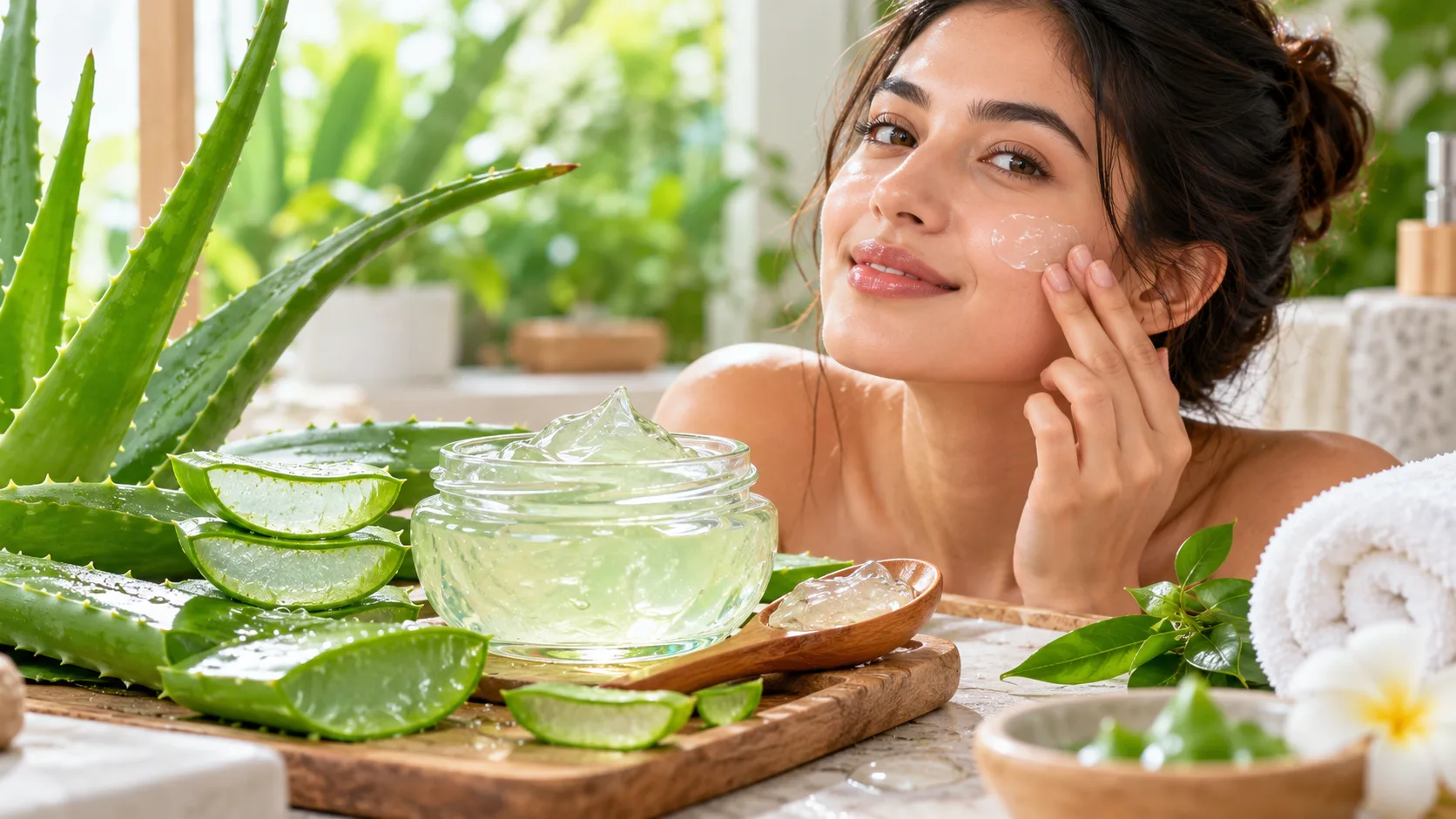

Aloe vera gel is a popular plant-based skincare ingredient known for its lightweight texture, cooling sensation, and moisturizing properties. Extracted from the inner leaves of the aloe vera plant, this clear gel has been used in traditional skincare practices for centuries. Today, it appears in moisturizers, soothing lotions, after-sun products, and various cosmetic formulations.
Many people use aloe vera gel to help soothe dry skin, relieve mild irritation, and maintain comfortable skin hydration. Researchers have also investigated its potential effects on wound healing, inflammation, and skin barrier function. However, not every advertised aloe vera benefit is supported by strong scientific evidence, and results depend on the product formulation.
Understanding aloe vera gel benefits, safe application methods, possible side effects, and product quality can help you make informed skincare decisions. This guide explains how aloe vera works, when it may be helpful, and how to incorporate it into a simple skincare routine without relying on exaggerated claims.
What Is Aloe Vera Gel?
Aloe vera gel is a clear, jelly-like substance found inside the fleshy leaves of the aloe vera plant, scientifically known as Aloe barbadensis Miller. The plant belongs to the Asphodelaceae family and grows naturally in warm, dry environments. Its thick leaves contain water-rich tissues that help it tolerate dry conditions. These tissues provide the gel commonly used in skincare preparations.
The inner leaf gel contains mostly water along with smaller quantities of polysaccharides, amino acids, minerals, and other naturally occurring compounds. One frequently discussed component is acemannan, a polysaccharide investigated for its possible biological activity. The concentration of these compounds varies between plants and processing methods. Their presence does not automatically establish medicinal benefits.
Aloe vera gel is available in several forms, including fresh leaf gel, cosmetic gels, creams, and lotions. Commercial formulations often contain additional ingredients that influence texture, preservation, and skin compatibility. Some products also contain fragrance or alcohol. Reading ingredient labels is important because different products may produce different effects on sensitive skin.
Aloe Vera Gel Benefits for Skin Hydration
One of the most practical aloe vera gel benefits is its ability to provide temporary skin hydration. The gel contains substantial water and ingredients that can help maintain moisture on the skin’s surface. Its lightweight consistency makes it appealing to people who prefer products that absorb easily. However, moisturizing effectiveness depends on the complete formulation.
Aloe vera gel may feel refreshing when applied to skin experiencing mild dryness. Some commercial products combine aloe with humectants such as glycerin to improve moisture retention. Others contain ingredients that help reduce water loss from the skin. Pure aloe gel alone may not provide enough lasting moisture for people with very dry skin.
A balanced skincare routine can combine a gentle cleanser with an appropriate moisturizer. Aloe vera gel may serve as an additional hydrating product when personally tolerated. People with persistent dryness may benefit more from moisturizers containing ceramides, glycerin, or petrolatum. Selecting products according to skin needs is more useful than relying on one botanical ingredient.
How Aloe Vera Gel Soothes Mild Skin Irritation
Aloe vera gel is widely associated with a cooling sensation that can feel comforting on mildly irritated skin. Its water-rich texture spreads easily and may provide temporary relief from dryness-related discomfort. Some laboratory studies have investigated aloe compounds for possible anti-inflammatory activity. However, these findings do not establish that every aloe gel treats inflammatory skin conditions.
Mild irritation can develop from weather exposure, friction, frequent washing, or unsuitable skincare products. Applying a fragrance-free aloe formulation may feel soothing for some individuals. Nevertheless, aloe itself can cause irritation or allergic reactions in others. Testing a small area before widespread application helps identify possible sensitivity.
Persistent redness, swelling, pain, or unexplained irritation should receive appropriate medical assessment. Aloe vera gel is not a substitute for treating skin infections, significant allergic reactions, or diagnosed inflammatory disorders. A gentle skincare routine and avoiding known irritants are often more important. Comforting effects should not be confused with proven medical treatment.
Aloe Vera Gel for Sunburn and After-Sun Care
Aloe vera gel is a familiar ingredient in after-sun skincare products because of its cooling and moisturizing qualities. Some people find that applying a gentle aloe formulation temporarily improves comfort after mild sun exposure. However, clinical evidence that aloe vera reliably speeds sunburn healing is limited. Its cooling sensation does not reverse ultraviolet damage.
For mild sunburn, cool compresses and appropriate moisturizers can help improve comfort. Avoid applying ice directly to damaged skin. Drinking enough fluids and protecting the affected area from further sunlight are also important. Aloe gel may be used on intact skin when tolerated, but products containing irritating fragrances or alcohol should be avoided.
Severe sunburn requires more careful attention, particularly when extensive blistering, fever, dizziness, or significant pain occurs. Aloe vera gel cannot replace professional treatment for serious burns. Prevention remains the most effective approach to sun-related skin damage. Broad-spectrum sunscreen, protective clothing, and shade provide more reliable protection than after-sun products alone.
Aloe Vera Gel and Acne-Prone Skin
Aloe vera gel is often included in skincare products designed for acne-prone skin. Its lightweight texture may appeal to people who dislike heavy or greasy moisturizers. Some small studies have investigated aloe formulations alongside established acne treatments. However, evidence does not establish aloe vera gel alone as a reliable treatment for acne.
Acne develops through several processes, including clogged hair follicles, excess oil production, inflammation, and bacterial activity. Aloe vera does not necessarily address all these factors. Although some preparations may have soothing properties, they cannot replace evidence-based acne treatments. Results reported with combination products should not be attributed entirely to aloe.
People with acne-prone skin can look for gentle, non-comedogenic moisturizers that suit their individual needs. If aloe vera gel causes stinging, redness, or additional breakouts, discontinue use. Persistent or painful acne may benefit from professional dermatological care. A consistent routine is generally more useful than frequently experimenting with new products.
Aloe Vera Gel for Dry and Sensitive Skin
Dry skin can feel uncomfortable when its protective barrier loses moisture. Aloe vera gel may provide temporary hydration and a soothing sensation, particularly in mild cases. However, its water-based texture may not be sufficient for prolonged moisture retention. Many people with dry skin need products containing additional barrier-supporting ingredients.
Sensitive skin may react to fragrances, preservatives, botanical extracts, and other cosmetic ingredients. Although aloe vera is often marketed as gentle, it is not automatically suitable for everyone. Some individuals develop redness or contact dermatitis after using aloe products. A simple fragrance-free formulation may reduce certain risks but cannot eliminate the possibility of a reaction.
People managing eczema or other chronic skin conditions should be especially cautious about introducing new botanical products. Established moisturizers and prescribed treatments may be more appropriate. Aloe vera should not replace medical recommendations for persistent inflammation or damaged skin. Product suitability depends on individual sensitivity rather than claims that an ingredient is universally soothing.
Aloe Vera Gel and Skin Barrier Support
The skin barrier helps protect the body from environmental irritants while limiting excessive moisture loss. Healthy barrier function depends on the structure of skin cells and surrounding lipids. Aloe vera gel may contribute temporary hydration, which can improve how the skin feels. Researchers have also investigated aloe-based formulations for their possible effects on skin condition.
Some laboratory and small clinical studies suggest aloe preparations may influence moisture-related measurements. However, results vary with formulation, concentration, and study design. Aloe vera cannot automatically repair every type of barrier damage. Products containing established moisturizing ingredients may offer more dependable support when dryness or irritation persists.
Maintaining the skin barrier usually involves gentle cleansing, appropriate moisturization, and avoiding excessive use of irritating products. Harsh scrubs and frequent exfoliation can worsen dryness or sensitivity. Aloe gel may fit into this routine when tolerated. However, adding more skincare products does not necessarily improve barrier health.
Can Aloe Vera Gel Help With Dark Spots?
Aloe vera is sometimes promoted as a natural solution for dark spots and uneven skin tone. Certain aloe-derived compounds have been investigated in laboratory studies involving pigmentation processes. These findings have encouraged interest in possible cosmetic applications. However, there is insufficient reliable clinical evidence that ordinary aloe vera gel consistently fades hyperpigmentation.
Dark spots can develop after inflammation, sun exposure, hormonal changes, or other skin conditions. Their causes influence which treatments are appropriate. Aloe vera gel may provide hydration but should not be expected to eliminate pigmentation. Claims that it quickly whitens or completely clears skin are not supported by established evidence.
Sun protection is particularly important when managing dark spots because ultraviolet exposure can worsen certain forms of pigmentation. Dermatologists may recommend specific treatments depending on the cause and skin sensitivity. Aloe vera is not a substitute for these approaches. A realistic skincare routine focuses on skin comfort and protection rather than guaranteed changes in appearance.
Aloe Vera Gel for Minor Wounds and Skin Healing
Aloe vera has a long history of traditional use in preparations for minor skin injuries. Researchers have examined whether its polysaccharides and other compounds influence processes involved in tissue repair. Some clinical studies suggest possible benefits for selected superficial wounds. However, the overall evidence is inconsistent and depends on the type of preparation.
Commercial cosmetic aloe vera gel is not necessarily sterile or appropriate for open wounds. Products may contain preservatives, fragrances, or other ingredients unsuitable for damaged tissue. Fresh plant gel can also introduce contamination. Therefore, ordinary aloe products should not replace established wound care methods or prescribed medical treatments.
Minor cuts are generally managed through appropriate cleaning and protection, while serious wounds require professional attention. Deep injuries, signs of infection, or wounds that fail to heal should be evaluated promptly. Medical-grade preparations differ from ordinary skincare products. The presence of aloe vera on an ingredient label does not establish that a product promotes wound healing.
Aloe Vera Gel for Oily and Combination Skin
People with oily skin sometimes prefer aloe vera gel because it feels lighter than rich creams. Many water-based aloe formulations spread easily and leave relatively little greasy residue. This can make them comfortable cosmetic choices during warm or humid weather. However, the texture depends on the complete ingredient list rather than aloe alone.
Oily skin still requires appropriate hydration and gentle cleansing. Removing too much surface oil through harsh products can contribute to irritation. An aloe-based moisturizer may suit some individuals, particularly when formulated without heavy fragrances. Nevertheless, aloe vera does not reliably regulate oil production or treat all conditions associated with oily skin.
Combination skin includes areas with different moisture and oil characteristics. A single lightweight product may work for some areas but feel insufficient elsewhere. Adjusting moisturizing products according to comfort is reasonable. Aloe vera gel can be considered one option among many rather than a necessary step for managing this skin type.
How to Use Aloe Vera Gel on Your Face
Aloe vera gel is commonly applied to clean skin as part of a moisturizing routine. Before using a new product, check its ingredients and perform a small patch test. This helps identify possible irritation before applying it more widely. Choose products designed for facial use rather than assuming every aloe formulation is suitable.
A gentle skincare routine usually begins with cleansing, followed by moisturizing products appropriate for individual needs. Aloe gel may be included as a lightweight hydrating layer when tolerated. If additional moisture is necessary, a conventional moisturizer can help reduce water loss. The order of products may vary depending on their formulation.
Avoid applying aloe vera gel directly into the eyes or onto significantly damaged skin. Stop using the product if burning, persistent redness, or swelling develops. More frequent application does not necessarily improve results. A simple routine that maintains comfort is generally preferable to using excessive quantities.
How to Apply Aloe Vera Gel to the Body
Aloe vera gel can be used on intact body skin that feels mildly dry or uncomfortable. Its smooth texture makes it easy to spread over areas such as the arms and legs. Some people enjoy the cooling sensation after spending time outdoors. However, product tolerance should always guide application.
After bathing, moisturizing products can help support normal skin hydration. Aloe-based gels may be suitable for people who prefer lightweight textures. For very dry areas, richer creams or ointments may provide longer-lasting moisture. Different body areas can require different levels of hydration depending on climate, washing habits, and individual needs.
Avoid applying cosmetic aloe products to severe burns, infected areas, or unexplained rashes. These conditions may require professional evaluation. Products containing alcohol or fragrance can also worsen irritation in sensitive individuals. Choosing gentle formulations is more important than selecting a product simply because it contains aloe vera.
Fresh Aloe Vera Gel vs. Store-Bought Aloe Gel
Fresh aloe vera gel comes directly from the inner portion of the plant’s leaves. It contains substantial water and naturally occurring plant compounds. However, extracting it at home can introduce contamination or accidentally include substances from the outer leaf. These factors make fresh gel less predictable than properly formulated commercial products.
Commercial aloe vera gels often include preservatives to reduce microbial growth during storage. Some also contain humectants, stabilizers, or additional moisturizing ingredients. Their effectiveness and skin compatibility depend on the complete formulation. A product containing aloe does not automatically contain a high concentration of inner leaf gel.
Fresh and store-bought aloe differ in consistency, preservation, and potential exposure to unwanted substances. The yellow latex layer beneath the aloe leaf’s outer skin contains compounds that can cause irritation. Properly manufactured products may reduce this concern through processing. For routine skincare, a reputable fragrance-free cosmetic formulation is often more practical.
Does Aloe Vera Gel Help With Wrinkles?
Aloe vera gel is sometimes marketed as an anti-aging skincare ingredient because of its moisturizing properties. Hydrated skin may temporarily appear smoother and feel more comfortable. Researchers have also investigated whether certain aloe preparations influence skin elasticity and related measurements. However, studies remain limited, and results cannot be generalized to every commercial gel.
Wrinkles and changes in skin texture develop through several natural processes, including aging and environmental exposure. Aloe vera cannot stop these processes or guarantee visible changes. Its moisturizing effects may improve temporary dryness-related texture. Claims that aloe gel permanently removes wrinkles or reverses aging are not supported by strong clinical evidence.
Supporting long-term skin health involves appropriate sun protection, gentle cleansing, and suitable moisturization. These practices are more dependable than relying on one botanical ingredient. Aloe may be included when it feels comfortable and does not irritate the skin. Realistic expectations help distinguish basic skincare benefits from exaggerated cosmetic promises.
Aloe Vera Gel for Scalp and Hair Care
Aloe vera gel is sometimes used in scalp and hair care products because of its lightweight, water-rich consistency. Certain formulations may temporarily moisturize the scalp or make hair feel smoother. However, scientific evidence supporting major hair-related benefits remains limited. Aloe vera should not be considered a proven treatment for hair loss.
Some people apply aloe-based products to dry or mildly uncomfortable scalp skin. Nevertheless, scalp irritation can result from dandruff, dermatitis, allergies, or other conditions. Aloe may not address the underlying cause and can occasionally make irritation worse. Persistent itching, scaling, or redness should be evaluated appropriately.
Hair care needs vary according to texture, scalp condition, and product sensitivity. Gentle cleansing and suitable conditioning products provide a practical foundation. Aloe vera can be an optional ingredient when personally tolerated. Products claiming dramatic hair growth or permanent dandruff removal should be evaluated cautiously because reliable evidence is lacking.
Aloe Vera Gel Side Effects and Allergic Reactions
Topical aloe vera gel is generally well tolerated by many people, but side effects are possible. Reported reactions include itching, redness, burning sensations, and allergic contact dermatitis. The likelihood of irritation may depend on the formulation and individual sensitivity. A product described as natural is not automatically free from potential adverse effects.
Some commercial gels contain fragrance, alcohol, coloring agents, or preservatives that can also irritate sensitive skin. This makes it difficult to determine whether a reaction is caused by aloe itself or another ingredient. Checking product labels can help identify common irritants. Patch testing is particularly useful before introducing unfamiliar skincare products.
Severe swelling, widespread rash, or difficulty breathing requires urgent medical attention. Mild irritation should also prompt discontinuation of the product. Individuals with diagnosed skin allergies may benefit from professional guidance when selecting moisturizers. Continuing to use an irritating product is unlikely to improve skin health.
Is Aloe Vera Gel Safe for Everyday Use?
Aloe vera gel can be used as part of a daily skincare routine when the formulation is appropriate and the skin tolerates it well. However, there is no requirement to use aloe every day. The frequency of application should reflect personal comfort and skin needs. More frequent use does not automatically produce stronger benefits.
People with healthy skin may find that a simple moisturizer provides sufficient hydration. Others prefer aloe-based products because of their lighter texture. Both approaches can be reasonable. Skin care is most effective when products support comfort without creating irritation or unnecessary complexity.
Aloe products intended for topical application should not be swallowed or used internally. Oral aloe latex and certain whole-leaf preparations carry important safety concerns. These products differ substantially from cosmetic aloe gel. Pregnant individuals, children, and people with medical conditions should avoid medicinal aloe preparations without appropriate professional guidance.
How to Choose Quality Aloe Vera Gel
Choosing aloe vera gel begins with reading the ingredient label rather than relying on packaging claims. Some products contain aloe as a major ingredient, while others include only small quantities. Additional humectants and moisturizers may improve performance, but fragrances or alcohol can irritate certain skin types. A clear ingredient list helps identify suitable formulations.
Products marketed as pure, organic, or natural are not automatically better for sensitive skin. Cosmetic quality depends on formulation, manufacturing practices, and appropriate preservation. Claims that a product is completely chemical-free are misleading because all ingredients consist of chemical substances. Safety and compatibility matter more than promotional terminology.
A reputable manufacturer should provide clear usage directions, storage information, and ingredient details. Avoid products with unclear labeling or unrealistic medical promises. Aloe vera gel should not be advertised as a guaranteed cure for eczema, acne, burns, or infections without appropriate evidence. Choosing a gentle, well-formulated product is more useful than following exaggerated marketing claims.
How to Store Aloe Vera Gel Properly
Commercial aloe vera gel should be stored according to the manufacturer’s instructions. Many products are designed for storage at ordinary room temperatures away from excessive heat and direct sunlight. Their preservatives help maintain product quality during the stated shelf life. However, improper storage can still affect texture, appearance, and stability.
Avoid introducing water, dirty fingers, or contaminated utensils into containers. These practices can increase the possibility of microbial contamination, particularly in products with inadequate preservation. Close the container securely after use. Discard products showing unusual odor, color changes, separation, or other signs of deterioration.
Freshly extracted aloe gel is especially vulnerable to spoilage because it contains substantial water and lacks commercial preservation. Homemade preparations can become contaminated even when refrigerated. Preparing large quantities for extended storage is therefore not advisable. For convenience and consistent quality, commercially preserved cosmetic products are often easier to manage.
Conclusion
Aloe vera gel is a water-rich skincare ingredient valued for its lightweight hydration, cooling sensation, and potential soothing properties. It may help improve comfort in mildly dry or irritated skin, depending on the formulation. Researchers have also investigated aloe preparations for wound healing and other applications, but evidence remains inconsistent for many advertised benefits.
Using aloe vera gel safely involves selecting appropriate products, checking ingredients, and monitoring individual skin reactions. Commercial formulations may be more predictable than fresh homemade preparations, particularly because aloe leaf latex and contamination can create problems. People with sensitive skin should introduce new products carefully and discontinue use if irritation develops.
Aloe vera can be a useful optional addition to a simple skincare routine, but it is not essential for healthy skin. Gentle cleansing, appropriate moisturization, and regular sun protection remain important foundations. Persistent skin problems, serious burns, and suspected infections require professional medical care rather than reliance on botanical products.
Frequently Asked Questions (FAQs)
What Are the Main Benefits of Aloe Vera Gel for Skin?
Aloe vera gel may provide temporary hydration and a cooling sensation that feels soothing on mildly irritated skin. However, evidence for treating acne, serious burns, or chronic skin conditions remains limited.
Can I Apply Aloe Vera Gel to My Face Every Day?
Many people can use an appropriate aloe vera formulation daily when their skin tolerates it. However, everyday use is not necessary for everyone, and products should be discontinued if irritation develops.
Is Aloe Vera Gel Good for Acne?
Aloe vera may provide lightweight hydration for acne-prone skin, but it is not an established standalone acne treatment. Persistent or painful acne is better managed with appropriate evidence-based skincare and professional guidance.
Can Aloe Vera Gel Remove Dark Spots?
There is insufficient reliable evidence that ordinary aloe vera gel consistently removes dark spots. Some aloe compounds have been investigated for pigmentation effects, but effective treatment depends on the underlying cause.
Does Aloe Vera Gel Have Side Effects?
Yes. Aloe vera gel can occasionally cause itching, redness, burning, or allergic contact dermatitis. Additional ingredients such as fragrance or alcohol may also irritate sensitive skin, making product selection and patch testing important.