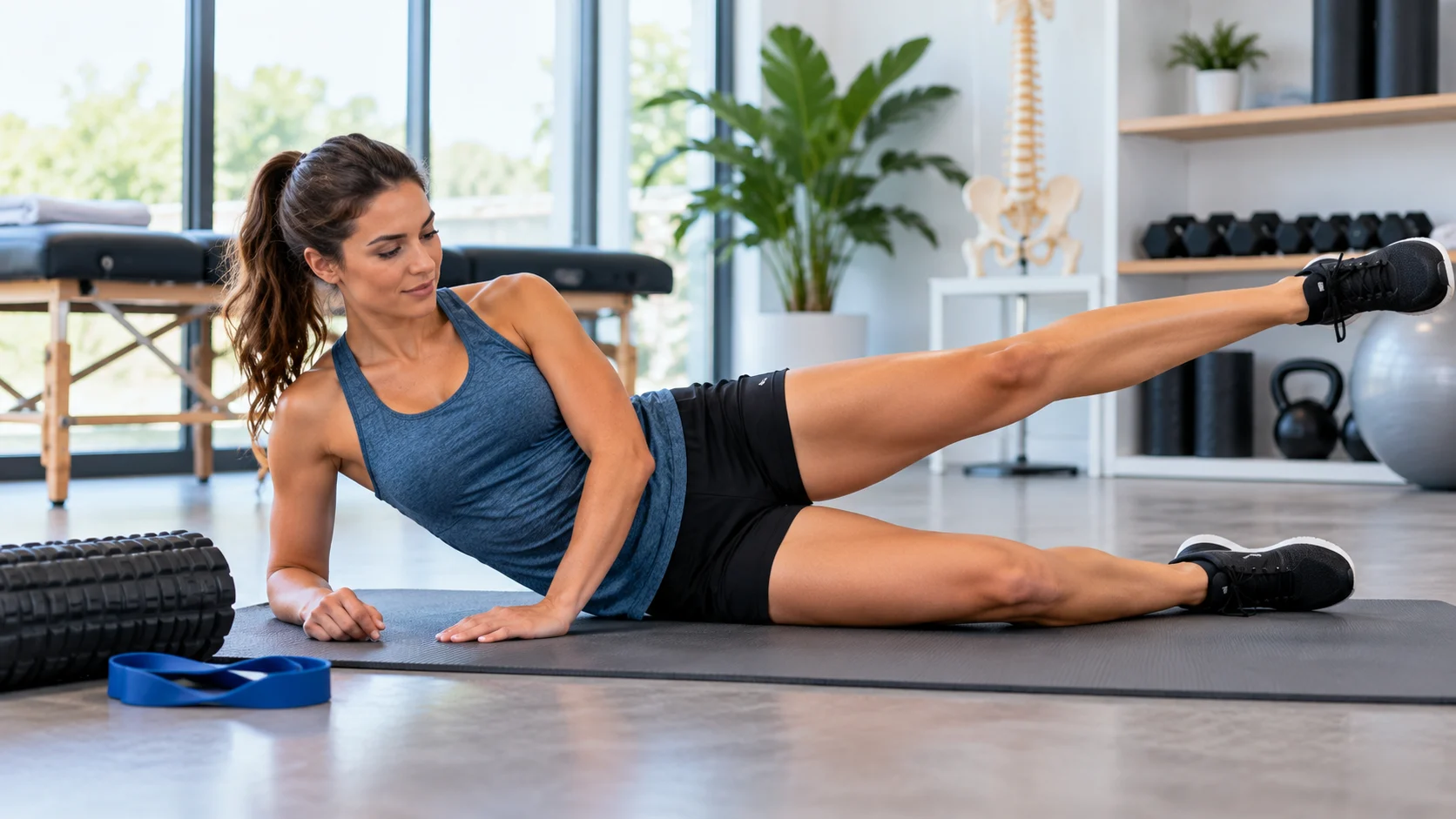

Iliotibial band syndrome exercises can help improve hip strength, knee stability, and movement control while supporting recovery from outer knee pain. This condition commonly affects runners, cyclists, hikers, and people who perform repetitive knee movements. Choosing appropriate exercises and following proper techniques can help manage discomfort and support a gradual return to physical activity.
Understanding which movements are helpful is important because not every stretch or strengthening exercise works for everyone. A balanced rehabilitation routine usually includes gentle mobility work, targeted muscle strengthening, and gradual activity progression. This guide explains effective IT band syndrome exercises, their benefits, proper form, and practical tips for exercising safely.
What Is Iliotibial Band Syndrome?
Iliotibial band syndrome, often called IT band syndrome or ITBS, is an overuse condition that commonly causes pain along the outside of the knee. The iliotibial band is a thick strip of connective tissue running from the outer hip toward the upper shin. It helps support lower-body movement and contributes to knee and hip stability during physical activities.
The condition develops when repeated movements increase irritation or compression of sensitive tissues around the outer knee. Running downhill, cycling for extended periods, and suddenly increasing training intensity may contribute to symptoms. Some people experience discomfort during exercise that becomes more noticeable as activity continues, particularly when the knee repeatedly bends and straightens.
IT band syndrome symptoms often include localized outer knee pain, tenderness, and discomfort during activities involving repeated knee movement. Pain sometimes improves with rest but returns when the same activity resumes. Because other knee conditions can cause similar symptoms, persistent pain should be assessed by a healthcare professional before beginning a structured rehabilitation program.
How Exercises Help With IT Band Syndrome Recovery
Exercises for iliotibial band syndrome focus on improving the strength and coordination of muscles surrounding the hips, thighs, and knees. Strong hip stabilizers help control leg movement during walking, running, and climbing stairs. Better movement control may reduce unnecessary stress around the outer knee and make everyday physical activities more comfortable.
Targeted strengthening exercises can address muscle weakness and movement patterns that contribute to repeated irritation. The gluteus medius, gluteus maximus, and other hip muscles play important roles in stabilizing the pelvis. Improving their strength supports balanced lower-body movement and helps distribute physical demands more effectively during running and other repetitive activities.
Gentle stretching and mobility exercises may also improve comfort, especially when surrounding muscles feel tight. However, the iliotibial band itself is not easily lengthened through conventional stretching techniques. Recovery generally works best when exercises are combined with appropriate training adjustments, symptom monitoring, and a gradual return to activities that previously caused discomfort.
Side-Lying Hip Abduction for Hip Strength
Side-lying hip abduction is a useful strengthening exercise for the gluteus medius, an important muscle for pelvic and hip stability. Improving this muscle’s strength may help maintain better leg alignment during physical activities. The exercise requires minimal equipment and can be performed at home, making it a practical option during early rehabilitation when tolerated.
To perform the movement, lie on your side with the lower knee comfortably bent and the upper leg straight. Keep your hips stacked, point your upper foot forward, and slowly raise the top leg without rotating your pelvis backward. Pause briefly before lowering the leg with control, maintaining steady breathing throughout the exercise.
Begin with a comfortable number of repetitions, such as eight to twelve, if the movement does not aggravate symptoms. Focus on controlled motion rather than lifting the leg as high as possible. Avoid swinging or twisting your trunk, and reduce the range of motion if discomfort develops around the hip or outer knee.
Clamshell Exercises for Better Hip Stability
Clamshell exercises target the muscles responsible for supporting hip rotation and pelvic stability. They are frequently included in rehabilitation programs for runners experiencing outer knee discomfort. By improving hip muscle control, clamshells may help support more consistent lower-body movement during walking, stair climbing, and running activities that place repeated demands on the knees.
Start by lying on your side with your knees bent and your feet positioned together. Keep your pelvis stable while slowly lifting the upper knee, allowing the legs to open like a clamshell without separating your feet. Raise the knee only as far as you can comfortably manage without allowing your hips to roll backward.
Perform approximately eight to fifteen controlled repetitions if comfortable, resting between sets as needed. Beginners can perform the movement without resistance, while a light resistance band may be introduced later when symptoms allow. Avoid rushing repetitions because slow, deliberate movements make it easier to maintain proper form and engage the intended muscles.
Glute Bridges for Lower-Body Support
Glute bridges strengthen the gluteus maximus and other muscles that support hip extension and lower-body stability. These muscles help generate force during walking, running, and climbing stairs. Stronger hip extensors can contribute to improved movement efficiency and provide additional support for the lower body during activities that repeatedly load the knee.
Lie on your back with your knees bent, feet flat on the floor, and arms resting comfortably beside your body. Gently tighten your abdominal muscles and lift your hips until your shoulders, hips, and knees form a relatively straight line. Hold the raised position briefly before lowering your hips slowly without arching your lower back.
Start with a manageable range and perform eight to twelve repetitions when comfortable. Press evenly through both feet and avoid pushing the hips excessively high, which may increase lower-back strain. As your strength improves, you can gradually increase repetitions or holding time, provided the exercise remains comfortable during and after completion.
Standing Hip Abduction for Everyday Stability
Standing hip abduction strengthens the muscles that help stabilize the pelvis when weight is supported by one leg. This ability is particularly important during walking and running because the body repeatedly shifts weight between legs. Practicing controlled standing movements can improve balance, coordination, and confidence during everyday activities without requiring complicated exercise equipment.
Stand upright beside a sturdy chair or countertop and use it for balance when necessary. Keep your supporting knee slightly relaxed while slowly moving the opposite leg outward without leaning your torso. Maintain your toes pointing forward and avoid rotating your hips, then return the moving leg to its starting position in a controlled manner.
Complete a comfortable set of eight to twelve repetitions on each side, adjusting the range if discomfort develops. Concentrate on maintaining an upright posture and keeping your pelvis level throughout the movement. A light resistance band can provide additional challenge later, but proper technique and symptom tolerance should remain more important than resistance.
Step-Ups for Functional Knee and Hip Control
Step-ups are functional strengthening exercises that imitate everyday movements such as climbing stairs and stepping onto raised surfaces. They engage the quadriceps, gluteal muscles, and other stabilizers involved in lower-body coordination. When introduced at an appropriate rehabilitation stage, step-ups can help improve controlled weight transfer and confidence during common activities involving the knees.
Begin with a low, stable step and position one foot completely on its surface. Slowly transfer your weight onto the leading leg and rise onto the step while maintaining a comfortable knee position. Keep the knee generally aligned with the foot, avoid allowing the pelvis to drop excessively, and step down with control.
Start with a low step and a small number of repetitions, increasing the challenge only when the movement remains comfortable. Avoid using a high platform or rushing through repetitions, especially when outer knee symptoms are still sensitive. If step-ups reproduce familiar pain, return to easier exercises and consider professional guidance before progressing.
Hip Flexor Stretch for Improved Mobility
The hip flexors connect the pelvis and upper leg and contribute to movements involving lifting the knee or bending at the hip. Prolonged sitting and repetitive activities may leave these muscles feeling tight or restricted. Gentle hip flexor stretching can improve comfortable hip movement, although it does not directly stretch or lengthen the iliotibial band.
Begin in a half-kneeling position with one knee resting on a padded surface and the opposite foot placed forward. Keep your torso upright while gently tightening the gluteal muscles on the kneeling side. Slowly shift your pelvis forward until you notice a mild stretch along the front of the hip without arching your lower back.
Hold the position for approximately twenty to thirty seconds if comfortable, then repeat on the opposite side. Stretching should produce a gentle pulling sensation rather than sharp pain or increasing knee discomfort. Use additional padding beneath the knee when necessary, and choose a standing variation if kneeling creates pressure or irritation.
Glute and Piriformis Stretches for Hip Comfort
Gluteal and piriformis stretches may improve comfort when muscles around the back of the hip feel stiff. These muscles contribute to hip rotation and lower-body control during movement. Although stretching does not directly treat every cause of IT band syndrome, maintaining comfortable mobility can complement a strengthening program and make certain everyday movements feel easier.
For a gentle figure-four stretch, lie on your back with both knees bent and feet resting on the floor. Place one ankle over the opposite thigh, keeping the crossed foot relaxed and avoiding pressure on the knee. If comfortable, gently draw the supporting thigh toward your body until you feel a mild stretch around the buttock.
Hold the stretch for around twenty to thirty seconds while breathing naturally and keeping your shoulders relaxed. Avoid forcing the crossed knee downward or pulling aggressively, as excessive pressure may irritate sensitive tissues. Repeat on both sides and reduce the intensity if you experience discomfort in the knee, hip, or lower back.
Common Mistakes to Avoid During IT Band Exercises
One common mistake is performing strengthening exercises through significant pain because discomfort is mistaken for productive muscle effort. Mild muscular fatigue may be normal, but sharp or worsening outer knee pain should not be ignored. Continuing to load an irritated area too aggressively can delay progress and make it harder to identify which exercises are appropriate.
Another mistake is increasing resistance, repetitions, or training intensity before developing sufficient movement control. Adding heavy resistance bands to clamshells or hip abductions may encourage compensatory movements when the muscles become fatigued. Gradual progression allows the body to adapt while maintaining correct technique, particularly when returning to exercises after a period of reduced activity.
Relying entirely on stretching or aggressive foam rolling is another limitation of many self-directed routines. Directly applying heavy pressure over a painful outer knee may increase irritation rather than improve recovery. A more balanced approach includes hip strengthening, manageable mobility work, adjusted training loads, and evaluation of factors such as running habits or cycling setup.
Tips for Creating an Effective IT Band Exercise Routine
Begin by selecting a few comfortable exercises that address hip strength and movement control without aggravating your symptoms. Side-lying hip abductions, clamshells, and gentle glute bridges may provide a manageable starting point. Exercise selection should depend on current pain levels, functional ability, and professional advice when available rather than following an identical routine for everyone.
Consistency is generally more useful than completing a demanding workout occasionally. Allow time for recovery between challenging strengthening sessions and increase resistance only when your body tolerates the existing routine. Pay attention to how your knee feels later in the day and the following morning, because delayed discomfort can indicate that activity demands need adjustment.
Combine rehabilitation exercises with thoughtful changes to running, cycling, or other activities that trigger symptoms. Temporarily reducing distance, speed, hills, or repetitive knee loading may provide an opportunity for irritation to settle. Return to higher training demands gradually, using symptom response and restored strength as guides rather than relying on a fixed recovery deadline.
When to Seek Professional Help for IT Band Pain
Although many cases of IT band syndrome improve with activity modification and rehabilitation, persistent symptoms deserve medical attention. A physical therapist or qualified healthcare professional can examine movement patterns, assess muscle strength, and identify factors contributing to irritation. An individualized program may be especially beneficial when symptoms repeatedly return after attempts to resume exercise.
Seek prompt medical assessment if you experience severe pain, considerable swelling, inability to bear weight, or knee instability. Redness, fever, or symptoms following a significant injury also require evaluation rather than relying on home exercises. These signs can indicate problems that are different from typical iliotibial band syndrome and may need another treatment approach.
Professional assessment can also help distinguish IT band syndrome from meniscus injuries, ligament problems, and other conditions causing outer knee pain. A clinician may evaluate hip function, training history, footwear, and activity-related symptoms before recommending appropriate treatment. Early identification of contributing factors can help prevent repeated setbacks and support safer long-term activity participation.
Conclusion
Iliotibial band syndrome exercises can play an important role in managing outer knee discomfort and restoring comfortable movement. Strengthening the hips, improving muscular control, and maintaining comfortable mobility may support recovery when combined with appropriate activity modification. Choosing exercises that match your current abilities is essential for avoiding unnecessary irritation during rehabilitation.
Movements such as clamshells, side-lying hip abductions, glute bridges, and controlled step-ups offer practical ways to develop lower-body strength. Gentle stretches can complement these activities when surrounding muscles feel tight. However, aggressive stretching and excessive exercise intensity are not necessary for progress and may make symptoms worse.
The most effective approach emphasizes proper form, gradual progression, adequate recovery, and attention to your body’s response. If symptoms persist, worsen, or interfere with everyday activities, seek guidance from a qualified healthcare professional. With an individualized plan and consistent exercise habits, many people can return to their preferred activities with greater confidence.
Frequently Asked Questions (FAQs)
What Are the Best Exercises for Iliotibial Band Syndrome?
Common exercises include clamshells, side-lying hip abductions, glute bridges, and standing hip abductions. These movements target hip stability and strength, but the best selection depends on symptoms and individual rehabilitation needs.
Can Stretching Help Relieve IT Band Syndrome?
Gentle stretching may ease tightness in nearby hip and thigh muscles and improve movement comfort. However, the IT band itself is difficult to stretch, so strengthening and activity modification are often equally important.
How Often Should I Perform IT Band Syndrome Exercises?
Gentle mobility work may be performed regularly when comfortable, while strengthening exercises generally benefit from recovery between challenging sessions. Exercise frequency should reflect symptom tolerance, training history, and guidance from a healthcare professional.
Should I Continue Running With IT Band Syndrome?
Running may need to be reduced or temporarily paused if it triggers worsening outer knee pain. A gradual return is usually more appropriate once symptoms improve and lower-body strength and movement tolerance recover.
How Long Does IT Band Syndrome Take to Heal?
Recovery varies depending on symptom severity, activity demands, and rehabilitation progress. Some people improve within several weeks, while others require longer. Persistent or worsening pain should be evaluated rather than managed through exercise alone.