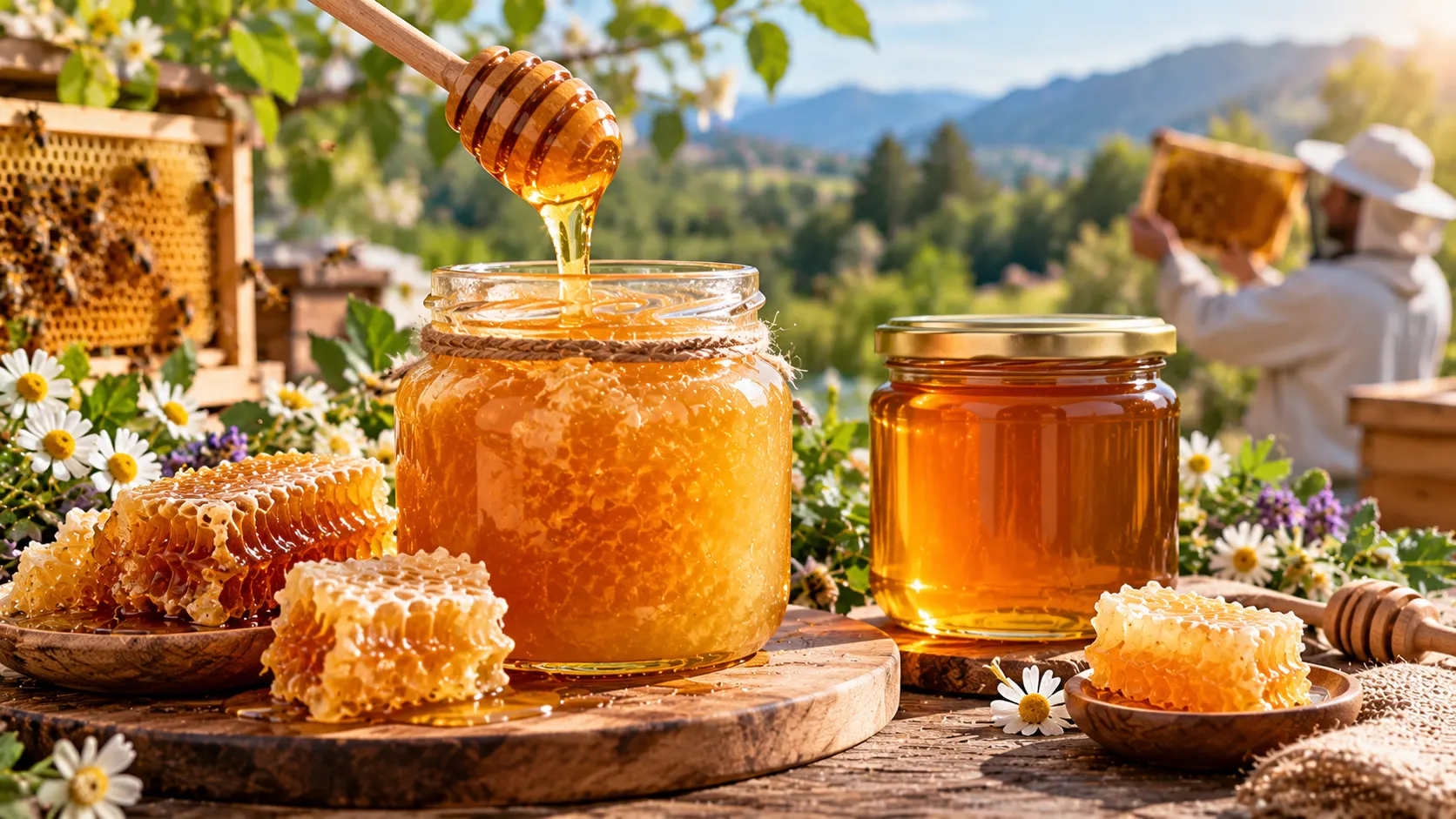

Raw honey is a natural sweetener valued for its rich flavor, golden appearance, and traditional uses. Unlike heavily processed honey, raw honey generally undergoes minimal handling after being removed from the hive. It may retain more pollen particles, enzymes, and naturally occurring plant compounds, depending on how it is collected, filtered, and stored.
Many people choose raw honey because they believe it offers greater nutritional and wellness benefits than regular honey. However, the differences are often less dramatic than advertisements suggest. Both varieties primarily contain natural sugars, and neither should be considered a treatment for serious medical conditions or a replacement for balanced nutrition.
Understanding raw honey benefits, nutritional properties, processing methods, and potential risks can help you make informed choices. This guide explains how raw honey differs from regular honey, what scientific evidence suggests, and how to enjoy it safely in everyday foods and beverages.
What Is Raw Honey?
Raw honey is honey that has undergone relatively little processing after being collected from a beehive. Beekeepers usually remove it from honeycomb frames and may strain it to separate larger pieces of wax and debris. Unlike many commercial products, raw honey is generally not subjected to high-temperature processing. However, there is no universally consistent definition across every marketplace.
Honey itself is produced when bees collect nectar from flowering plants and transform it through natural processes inside the hive. The resulting substance contains mostly fructose and glucose, along with water and small quantities of other compounds. Its flavor and color depend largely on the flowers visited by the bees. Raw honey preserves many characteristics of this original product.
Raw honey may appear cloudy, contain fine particles, or crystallize during storage. These characteristics are not necessarily signs of poor quality. Small amounts of pollen, wax, or other naturally occurring materials may remain after basic straining. However, appearance alone cannot confirm whether a product is genuinely raw or establish its nutritional quality.
Raw Honey vs. Regular Honey: Key Differences
The main difference between raw honey and regular commercial honey involves processing. Raw honey is typically strained and packaged with relatively little additional treatment. Regular honey may undergo more extensive filtration and controlled heating to improve clarity and handling. These methods can create a smoother appearance and help slow crystallization during storage and distribution.
Heating and filtration may reduce certain naturally occurring enzymes, pollen particles, and other components. The extent of these changes depends on the temperature, duration, and processing method. However, both raw and regular honey remain primarily mixtures of natural sugars. Differences in minor compounds do not automatically translate into major differences in health outcomes.
Regular honey is not necessarily unhealthy or inferior simply because it has been processed. Many commercially prepared varieties retain their characteristic flavor and sweetness. Similarly, raw honey is not automatically more nutritious in every meaningful way. Choosing between them often depends on flavor preferences, texture, product quality, and personal expectations.
Raw Honey Nutrition Facts
Raw honey mainly consists of carbohydrates in the form of natural sugars. A tablespoon weighing approximately 21 grams typically contains around 64 calories and 17 grams of carbohydrates. Most of these carbohydrates come from fructose and glucose. Honey contains very little protein, fat, or dietary fiber, making it primarily an energy-providing sweetener.
Small quantities of vitamins, minerals, amino acids, and organic acids may also be present. However, the amounts are generally too low to make honey a significant source of essential nutrients in ordinary servings. Its nutritional composition can vary according to floral origin and processing. Darker honey varieties sometimes contain greater concentrations of certain plant compounds.
Raw honey should not be considered nutritionally equivalent to whole fruits, vegetables, or other nutrient-rich foods. Although it contains naturally occurring compounds, its sugar content remains substantial. Enjoying it as a sweetener can be part of a balanced diet. However, consuming large quantities does not provide proportionately greater nutritional benefits.
Raw Honey Benefits for Antioxidant Support
Raw honey contains naturally occurring compounds with antioxidant activity, including certain flavonoids and phenolic acids. These substances originate partly from the nectar and plants visited by honeybees. Antioxidants participate in reactions that help protect cellular components from oxidative damage. Their concentrations differ considerably between honey varieties and floral sources.
Some laboratory studies have demonstrated antioxidant activity in raw honey samples. Researchers have also investigated whether honey consumption influences oxidative stress markers in humans. However, evidence remains limited, and laboratory activity does not automatically establish meaningful health benefits. The amount of antioxidants consumed through ordinary servings may also be relatively small.
A varied diet provides many more opportunities to obtain antioxidant-related nutrients and plant compounds. Fruits, vegetables, legumes, nuts, and whole grains contribute complementary substances. Raw honey may add flavor and small quantities of these compounds, but it should not replace nutrient-dense foods. Its antioxidant content does not justify excessive sugar consumption.
Raw Honey and Its Natural Antibacterial Properties
Honey has attracted scientific attention because certain varieties demonstrate antibacterial activity under laboratory conditions. Its high sugar concentration, acidity, low available water, and naturally occurring compounds can help inhibit the growth of some microorganisms. Certain honey varieties also produce hydrogen peroxide under appropriate conditions. These properties contribute to the scientific interest surrounding honey.
However, antibacterial activity in laboratory experiments does not mean ordinary raw honey can treat infections inside the body. Commercial food-grade honey is not equivalent to medical-grade honey used in specialized wound care. Medical-grade products undergo controlled processing and testing. Raw honey should never be applied to serious wounds as a substitute for appropriate medical treatment.
Eating honey also does not guarantee protection against harmful bacteria or common infections. Its biological properties depend on the environment and how it is used. A food that inhibits bacterial growth under certain conditions may not produce the same effects after digestion. Responsible health claims must distinguish laboratory findings from proven clinical applications.
Raw Honey Benefits for Cough and Sore Throat Comfort
Honey is commonly used as a traditional home remedy for coughs and throat irritation. Its thick texture may provide a soothing sensation when swallowed. Some clinical research suggests that honey can reduce the frequency or severity of certain acute cough symptoms, particularly in children older than one year. However, the quality and findings of available studies vary.
Warm beverages containing honey can also feel comforting when the throat is irritated. Honey may temporarily coat the throat and make swallowing feel more pleasant. These effects are related to symptom relief rather than eliminating the underlying cause of an infection. Honey should not replace medical treatment when symptoms are severe or persistent.
Honey must never be given to infants younger than twelve months because of the risk of infant botulism. This warning applies to both raw and processed honey. Older children and adults may enjoy honey-containing foods when appropriate, but persistent coughing, breathing difficulties, or concerning symptoms require medical assessment. Raw honey is not inherently more effective than regular honey for cough relief.
Raw Honey and Digestive Health
Raw honey is sometimes promoted as a natural food for digestive wellness. It contains certain sugars and minor compounds that researchers have investigated for possible interactions with intestinal microorganisms. Some laboratory studies suggest that specific honey components may influence microbial activity. However, evidence supporting meaningful digestive benefits from ordinary raw honey consumption remains limited.
Honey contains very little dietary fiber, so it cannot replace fruits, vegetables, legumes, or whole grains as sources of fiber. It also contains sugars that may contribute to digestive discomfort in some individuals. People with fructose malabsorption, for example, may experience bloating or other symptoms after consuming honey. Individual tolerance can vary considerably.
A healthy digestive system benefits from varied nutrition, sufficient hydration, and appropriate physical activity. Raw honey may be enjoyed as a sweetener without being treated as a digestive remedy. Persistent abdominal discomfort or changes in bowel habits deserve professional evaluation. Broad claims that honey cleanses the gut or restores digestion are not supported by strong clinical evidence.
Raw Honey and Immune System Support
Raw honey contains small amounts of naturally occurring substances that researchers have examined for biological activity. These include certain phenolic compounds and enzymes. Some laboratory findings suggest potential interactions with immune-related processes. However, these results do not establish that eating raw honey significantly strengthens immune function in healthy individuals.
The immune system depends on adequate nutrition, sleep, physical activity, and many biological processes. Honey provides carbohydrates but does not contain substantial amounts of most essential immune-supporting nutrients. Its small quantities of plant compounds do not make it a complete nutritional solution. Claims that raw honey prevents common illnesses require stronger human evidence.
Maintaining immune health is best approached through consistent everyday habits. Eating different fruits, vegetables, whole grains, and protein-rich foods helps meet nutritional needs. Appropriate vaccination and medical care also play important roles. Raw honey can be included for flavor and enjoyment, but it should not replace established preventive healthcare practices.
Does Raw Honey Provide Natural Energy?
Raw honey provides carbohydrates that the body can use as an energy source. Its natural sugars are digested and absorbed through normal metabolic processes. Because honey contains mostly fructose and glucose, it can contribute calories to meals and snacks. However, its energy-providing function is not unique compared with other carbohydrate-containing foods.
Some marketing claims suggest that raw honey provides a special form of sustained energy. Research does not establish that ordinary raw honey consistently produces superior energy benefits compared with suitable carbohydrate sources. The body’s response depends on the amount consumed and the broader meal composition. Individual activity levels and nutritional needs also influence energy requirements.
For everyday well-being, adequate meals and balanced nutrition are more important than relying on concentrated sweeteners. Whole grains, fruits, legumes, and other carbohydrate sources provide additional nutrients and fiber. Raw honey may be used for flavor when desired. It should not be viewed as a substitute for nutritious meals or sufficient rest.
Raw Honey Benefits for Skin Care
Honey has a history of use in traditional skin preparations because of its texture and moisture-retaining properties. Some cosmetic products include honey as a humectant, an ingredient that helps attract and retain moisture. Researchers have also examined certain honey preparations for skin-related applications. However, ordinary raw honey is not automatically suitable for every skin condition.
Medical-grade honey dressings have been investigated and used in specific wound care settings. These products are processed and tested differently from food-grade raw honey. Applying ordinary honey to open wounds introduces avoidable contamination concerns. Serious burns, infections, and persistent skin problems require appropriate medical care rather than home treatment.
Raw honey may also cause irritation or allergic reactions in sensitive individuals. Its natural origin does not guarantee compatibility with every skin type. Commercial skincare products containing honey can have additional ingredients that influence their effects. Claims that raw honey removes scars, cures acne, or reverses skin aging require stronger evidence than traditional use alone.
Why Raw Honey Crystallizes Naturally
Crystallization is a normal physical process that can occur when glucose separates from the liquid portion of honey. Raw honey often crystallizes during storage because it contains naturally occurring sugar crystals and particles that may encourage the process. Temperature also influences crystallization speed. The resulting texture can range from fine and creamy to coarse and grainy.
Crystallized honey is not necessarily spoiled or unsafe. Its appearance changes, but the basic composition remains largely the same. Some people prefer crystallized honey because it spreads easily on bread or other foods. The rate of crystallization varies depending on the floral source and the balance of different sugars.
Regular commercial honey may remain liquid longer when processing removes particles that encourage crystallization. However, processed honey can crystallize as well. Crystallization alone cannot prove whether honey is raw, pure, or authentic. Evaluating product quality requires more reliable information than appearance or texture.
Different Types of Raw Honey
Raw honey is available in numerous varieties depending on the flowers visited by the bees. Clover honey is known for its relatively mild, sweet flavor and light appearance. Wildflower honey may have a more complex taste because bees collect nectar from several plant species. These differences make honey selection largely a matter of personal preference.
Buckwheat honey is often darker and has a stronger flavor than lighter floral varieties. Its color may reflect differences in naturally occurring plant compounds. Acacia honey is usually lighter and tends to remain liquid relatively well under suitable storage conditions. Different floral sources can produce distinct aromas, textures, and sugar compositions.
Manuka honey is another widely discussed variety, traditionally associated with nectar from certain Leptospermum plants. Some products are marketed for specialized antibacterial properties. However, commercial claims should be evaluated carefully, and food-grade honey should not be confused with medical treatments. No single variety should be assumed to provide universal health benefits.
How to Use Raw Honey in Everyday Meals
Raw honey can be used as a sweetener in foods such as yogurt, oatmeal, and homemade breakfast dishes. Its floral flavor complements fruits, nuts, and whole grains. A small addition can change the taste of a meal without requiring complicated preparation. Choosing the quantity based on personal preference helps maintain dietary balance.
Honey can also be added to salad dressings, marinades, and sauces. Its sweetness creates contrast with acidic ingredients such as lemon juice or vinegar. Different floral varieties can introduce subtle flavor differences. Cooking or heating may alter some of honey’s naturally occurring compounds, but it remains suitable for ordinary culinary applications.
For beverages, honey can be mixed into tea or other drinks as a sweetener. However, adding honey also increases the drink’s sugar content. It is not necessary to use honey for a beverage to be nutritious or enjoyable. Raw honey is best treated as a flavorful ingredient rather than an essential daily supplement.
How to Choose Quality Raw Honey
Choosing raw honey begins with examining the ingredient label and product information. Pure honey should not contain unnecessary added syrups or sweeteners. Some producers provide details about floral origin, harvesting practices, and processing methods. Transparent sourcing information may help consumers understand what they are purchasing.
Labels such as raw, natural, organic, and unfiltered do not always mean exactly the same thing. Organic certification may relate to production standards rather than proving the honey was never heated. Similarly, unfiltered honey may retain more visible particles without guaranteeing superior nutritional quality. Marketing terminology should therefore be considered carefully.
Honey authenticity can be difficult to determine through simple household tests. Color, thickness, crystallization, and appearance vary naturally between genuine honey varieties. Claims that water tests or flame tests reliably identify pure honey are misleading. Reputable sourcing and appropriate quality testing provide more dependable information than social media experiments.
How to Store Raw Honey Properly
Raw honey should generally be stored in a clean, tightly sealed container at room temperature. A dry location away from excessive heat and direct sunlight helps maintain its quality. Honey naturally contains little available water, contributing to its long storage life. However, contamination or excess moisture can still create problems.
Refrigeration is usually unnecessary and may encourage faster crystallization. If honey becomes crystallized, the texture change does not automatically indicate spoilage. Gentle warming may return some varieties to a more liquid consistency. Excessive heating can alter flavor and certain naturally occurring components, so high temperatures are best avoided.
Always use clean, dry utensils when removing honey from its container. Introducing water or food particles may increase the possibility of fermentation or contamination. Honey showing unusual fermentation, significant moisture problems, or other signs of deterioration should not be consumed. Proper storage helps preserve its flavor and general quality.
Raw Honey Side Effects and Safety Precautions
Although honey is a familiar food, consuming excessive quantities contributes substantial amounts of added or free sugars to the diet. Frequent high sugar intake can increase the risk of dental problems and contribute to dietary imbalance. Raw honey should not be considered sugar-free or suitable for unlimited consumption. Moderation remains appropriate even when a sweetener is naturally produced.
People with diabetes or other conditions affecting glucose regulation should account for honey’s carbohydrate content. Raw honey can raise blood glucose levels and is not a proven substitute for diabetes treatment. Individuals with allergies to certain bee-related substances or pollen may also need caution. Allergic reactions require appropriate medical attention.
The most important safety warning concerns infants younger than one year. Honey can contain spores of Clostridium botulinum, which may cause infant botulism. Raw honey, regular honey, and foods containing honey are all unsuitable for this age group. Older children and adults should also practice proper food handling and seek medical advice when relevant health concerns exist.
Conclusion
Raw honey is a minimally processed sweetener that may retain more naturally occurring enzymes, pollen particles, and certain plant compounds than heavily processed honey. Its distinctive flavor, texture, and floral characteristics make it appealing in many foods. However, both raw and regular honey contain substantial amounts of natural sugars, and their nutritional differences should not be exaggerated.
Some research supports particular uses of honey, including temporary relief of certain cough symptoms in people older than one year. Laboratory studies have also demonstrated antioxidant and antibacterial properties in selected honey varieties. However, these findings do not establish raw honey as a treatment for infections, digestive disorders, or other medical conditions.
Choosing between raw honey and regular honey often comes down to taste, texture, processing preferences, and reliable sourcing. Both can be enjoyed as sweeteners within a varied eating pattern. Appropriate moderation and careful storage remain important, while honey must never be given to infants under twelve months because of the risk of infant botulism.
Frequently Asked Questions (FAQs)
Is Raw Honey Healthier Than Regular Honey?
Raw honey may retain more enzymes, pollen particles, and certain plant compounds because it undergoes less processing. However, both types contain similar amounts of sugar, and major differences in human health outcomes have not been established.
Can You Eat Raw Honey Every Day?
Raw honey can be enjoyed as an occasional sweetener within a balanced diet. However, it contains substantial natural sugars, so regular consumption should account for overall dietary needs and dental health.
Does Raw Honey Help With Coughs?
Some evidence suggests honey may temporarily reduce certain acute cough symptoms in children older than one year. However, raw honey is not proven superior to regular honey, and persistent symptoms require medical assessment.
Why Does Raw Honey Become Thick and Crystallized?
Crystallization occurs when glucose forms solid crystals within honey. This natural process changes its texture without necessarily indicating spoilage. Both raw and regular honey can crystallize under suitable storage conditions.
Is Raw Honey Safe for Babies?
No. Raw honey and regular honey must never be given to infants younger than twelve months because they may contain Clostridium botulinum spores capable of causing infant botulism.