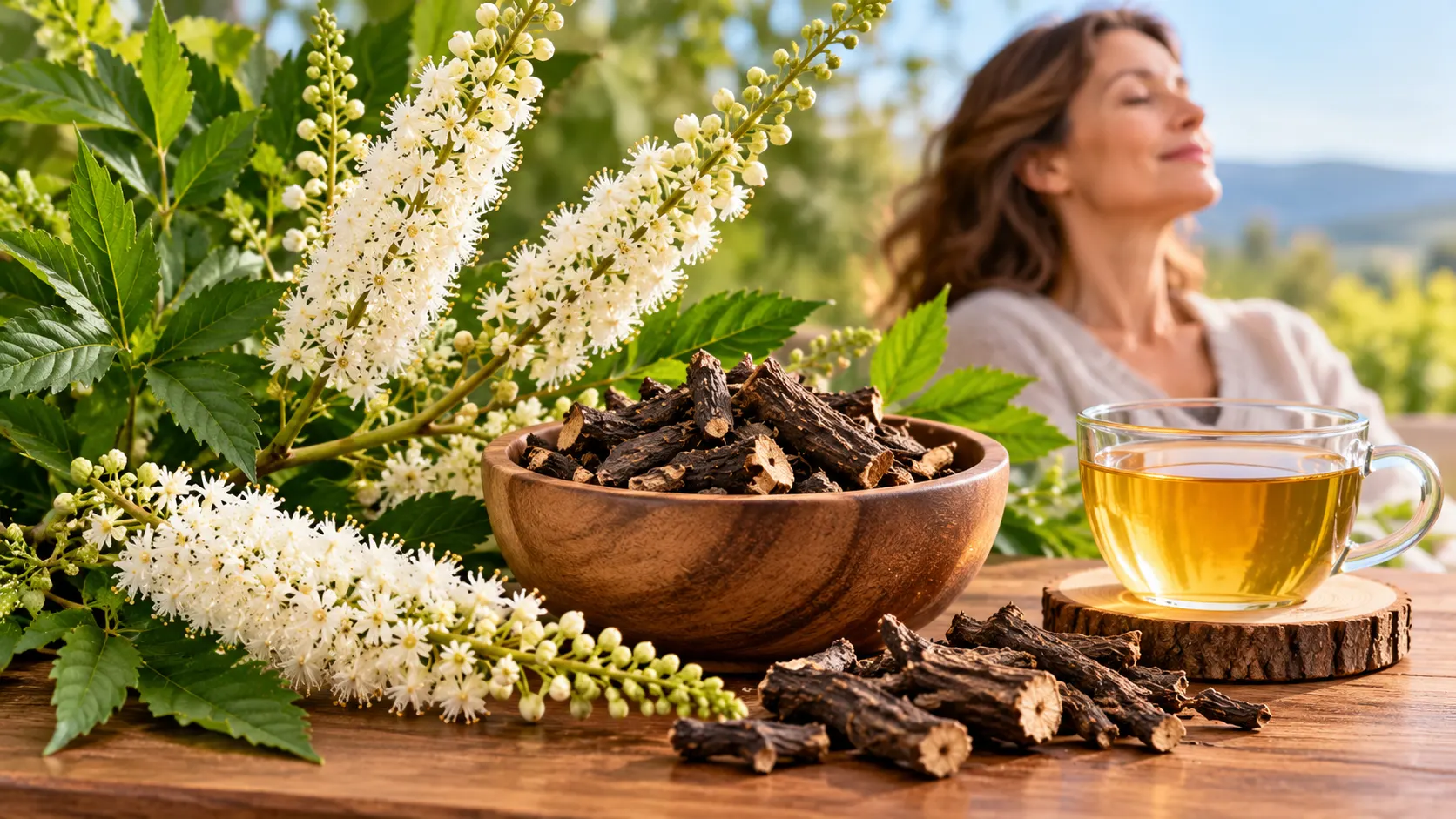

Black cohosh is a flowering plant widely recognized for its traditional use in women’s health, particularly during menopause. For generations, herbal practitioners have used its underground roots and stems in preparations intended to address various health concerns. Today, black cohosh supplements are commonly marketed for hot flashes, night sweats, and other symptoms associated with hormonal changes.
Although black cohosh is a popular herbal remedy, scientific evidence about its effectiveness remains mixed. Some clinical studies suggest that certain extracts may improve menopausal symptoms, while others have found little difference compared with placebo. Concerns about supplement quality, medication interactions, and possible liver injury also make understanding its safety particularly important.
This guide explores black cohosh uses, potential benefits, supplement formulations, side effects, and important precautions. It also explains what current research suggests and why herbal supplements should not automatically be considered safe simply because they come from plants.
What Is Black Cohosh?
Black cohosh, scientifically known as Actaea racemosa, is a perennial flowering plant native to North America. It belongs to the Ranunculaceae family, commonly called the buttercup family. The plant produces tall stems with clusters of small white flowers and grows naturally in woodland environments. Its roots and underground stems are the parts traditionally used in herbal preparations.
Black cohosh is also known by several other names, including black snakeroot, bugbane, and Cimicifuga racemosa. Historical records describe its use in traditional Native American herbal practices for various complaints. European settlers later adopted some of these applications. However, traditional usage does not necessarily demonstrate that a plant is effective or safe for treating medical conditions.
Modern black cohosh products are usually sold as capsules, tablets, liquid extracts, or powdered preparations. Their chemical compositions can vary depending on the plant material and extraction methods. Some manufacturers standardize products according to particular plant compounds. Understanding these differences is important because research findings involving one preparation may not apply to every commercially available supplement.
Traditional Uses of Black Cohosh
Black cohosh has a long history in traditional herbal medicine, particularly in practices addressing reproductive and menstrual concerns. Historical accounts describe its use for menstrual discomfort, irregular periods, and symptoms associated with later reproductive life. Some traditions also used the plant for joint and muscle complaints. These applications developed long before modern clinical research methods became available.
During the nineteenth century, black cohosh became increasingly familiar in North American and European herbal medicine. Practitioners sometimes included it in preparations intended to address women’s health concerns. Its popularity eventually expanded into commercial herbal products. Nevertheless, historical acceptance should not be confused with reliable scientific evidence supporting every traditional application.
Today, black cohosh is most commonly associated with menopause symptom management rather than its wider historical uses. Researchers have concentrated mainly on hot flashes and related complaints. Other traditional applications have received considerably less scientific investigation. For this reason, claims about menstrual pain, joint discomfort, or additional health benefits should be interpreted cautiously.
Black Cohosh Benefits for Menopause Symptoms
Menopause is a natural biological transition marked by the end of menstrual periods. Changes in reproductive hormone levels can produce symptoms such as hot flashes, night sweats, sleep disturbances, and vaginal dryness. Black cohosh is frequently marketed as a botanical option for managing these experiences. However, its clinical effectiveness has not been established consistently.
Some studies involving standardized black cohosh extracts have reported improvements in overall menopause symptoms. A review published in 2023 found possible benefits for certain symptoms, particularly hot flashes. Other well-designed trials have reported little or no advantage over placebo. Differences between formulations, participants, and study methods may help explain the inconsistent findings.
Current evidence suggests that certain black cohosh preparations may help some adults experiencing menopause symptoms, but results cannot be guaranteed. It is not a proven replacement for established medical treatments. People experiencing disruptive symptoms should discuss evidence-based options with a qualified healthcare professional. Appropriate treatment depends on symptom severity, medical history, and individual preferences.
Can Black Cohosh Reduce Hot Flashes and Night Sweats?
Hot flashes are sudden sensations of warmth that may involve sweating and temporary changes in skin temperature. They are common during perimenopause and menopause, although their frequency varies between individuals. Night sweats describe similar episodes occurring during sleep. Black cohosh has been studied primarily because of its potential effects on these vasomotor symptoms.
Some clinical trials have reported fewer or less intense hot flashes among participants using particular black cohosh extracts. However, other studies found no meaningful improvement compared with inactive treatments. Researchers have not identified a consistently effective formulation. These mixed outcomes mean that black cohosh cannot be considered a reliably effective treatment for every person.
Managing hot flashes may also involve identifying personal triggers and discussing medical treatment options. Some people find that maintaining a comfortable sleeping environment and dressing in adjustable layers improves everyday comfort. These measures do not necessarily prevent hot flashes. Persistent or severe symptoms deserve proper assessment rather than reliance on unverified herbal claims.
Black Cohosh and Sleep Quality
Sleep disturbances are common during menopause and may occur alongside night sweats, mood changes, or other symptoms. Black cohosh supplements are sometimes promoted as natural sleep-support products. Researchers have examined sleep-related outcomes in certain clinical studies involving menopausal participants. However, results remain inconsistent, and direct evidence for improving sleep quality is limited.
If a particular black cohosh preparation reduces night sweats, it might indirectly improve sleep for some individuals. However, this possible relationship has not been consistently demonstrated in clinical trials. Black cohosh should not be considered a general sleep aid. Research involving menopause symptoms cannot automatically establish effectiveness for insomnia caused by unrelated conditions.
Sleep problems may also result from stress, irregular schedules, medications, or underlying medical concerns. Maintaining consistent sleep hours and creating a comfortable nighttime environment can support healthier sleep habits. Persistent insomnia requires appropriate evaluation. Using herbal products without understanding the underlying cause may delay more effective treatment or introduce unnecessary risks.
Does Black Cohosh Support Mood and Emotional Well-Being?
Changes in mood, irritability, and emotional well-being can occur during the menopause transition. Some black cohosh supplements are marketed as products that promote emotional balance during this period. Researchers have investigated whether these preparations influence psychological symptoms. However, the available evidence does not consistently demonstrate meaningful benefits for anxiety or depression.
A review of black cohosh research reported possible improvements in certain menopausal symptoms without establishing significant benefits for anxiety or depressive symptoms. This distinction is important when evaluating wellness advertisements. Feeling more comfortable physically does not necessarily mean an herbal preparation directly improves emotional health. More targeted clinical research is needed.
Emotional well-being is influenced by sleep, relationships, physical health, and everyday circumstances. Regular activity, supportive conversations, and appropriate mental health care can be valuable when difficulties arise. Black cohosh should not replace established treatments for anxiety or depression. Persistent mood changes deserve compassionate, professional assessment rather than assumptions about hormonal causes.
How Black Cohosh May Work in the Body
Researchers have not established exactly how black cohosh might influence menopausal symptoms. The plant contains several naturally occurring substances, including triterpene glycosides and phenolic compounds. These components have attracted scientific interest because of their biological activity. However, identifying active substances does not automatically explain the clinical effects of commercial black cohosh products.
Earlier theories suggested that black cohosh might act similarly to estrogen, a hormone involved in reproductive function. More recent research has produced inconsistent findings about its hormonal effects. Scientists have also investigated possible influences on brain signaling pathways. None of these proposed mechanisms has been established as the definitive explanation for its potential benefits.
Understanding the mechanism matters because black cohosh is sometimes described as a natural hormone replacement. That description can be misleading. Its effects are not equivalent to those of prescribed menopausal hormone therapy, and its safety profile is different. People should not assume it restores hormone levels or treats conditions related to estrogen deficiency.
Black Cohosh Supplements and Available Forms
Black cohosh supplements are manufactured using material from the plant’s roots and underground stems. Common formulations include dried extracts, capsules, tablets, tinctures, and powdered products. Different extraction methods can produce preparations with varying chemical compositions. Consequently, two products displaying the same botanical name may not contain equivalent amounts of potentially active constituents.
Some manufacturers describe their products as standardized extracts. Standardization generally means that selected chemical markers are measured or maintained within particular limits. However, researchers have not established which compounds are responsible for all possible clinical effects. A standardized product therefore does not automatically guarantee greater effectiveness, safety, or consistency across different manufacturers.
Research studies have used various black cohosh preparations and quantities, but there is no universally established dose appropriate for everyone. Adult study amounts should not be treated as instructions for self-medication. Children and teenagers should not use black cohosh for general wellness purposes. Any consideration of medicinal use requires individualized guidance from a qualified healthcare professional.
Black Cohosh Side Effects and Common Reactions
Black cohosh has generally been tolerated in many short-term adult clinical trials, although unwanted effects have been reported. Commonly described side effects include stomach discomfort, nausea, headaches, and skin rashes. Some participants have also experienced breast discomfort or vaginal spotting. Not every symptom reported during a study is necessarily caused by the herbal preparation.
Digestive complaints may be mild, but persistent symptoms should not be ignored. New or unusual vaginal bleeding also requires appropriate medical evaluation rather than being attributed automatically to a supplement. Individual reactions can vary depending on health conditions and other medications. The absence of immediate symptoms does not prove that continued use is safe.
Long-term safety information remains limited because many clinical studies have examined black cohosh for relatively short periods. Commercial preparations may also differ from the carefully characterized extracts used in research. Combining several herbal products can make unwanted effects harder to identify. Medical guidance is particularly important when symptoms develop after starting any new supplement.
Black Cohosh and Potential Liver Health Risks
One of the most important safety concerns involving black cohosh is its possible association with liver injury. Rare reports have described serious liver problems in people taking products labeled as black cohosh. However, researchers have not conclusively established that the herb itself caused every reported case. Product contamination, incorrect botanical identification, and other factors may contribute.
Possible warning signs of liver problems include yellowing of the skin or eyes, dark urine, unusual fatigue, and persistent abdominal discomfort. Anyone experiencing these symptoms while taking a black cohosh product should stop using it and seek prompt medical assessment. Severe symptoms require urgent attention. Continuing supplementation while investigating a suspected adverse reaction is not advisable.
People with existing liver disease should generally avoid black cohosh unless a specialist has specifically assessed its risks. Individuals taking medications that may affect liver function also need professional advice. Independent product testing may reduce certain quality concerns but cannot eliminate every possibility of harm. The uncertainty surrounding rare liver injuries remains an important consideration.
Who Should Avoid Black Cohosh?
Black cohosh is not appropriate for everyone, particularly because research on some populations remains limited. Pregnant and breastfeeding individuals should avoid medicinal black cohosh products unless directed by an appropriate medical specialist. Its safety during these periods has not been established. Historical use involving childbirth does not demonstrate that such applications are safe.
People with hormone-sensitive conditions, including certain breast or uterine cancers, should seek specialist advice before considering black cohosh. Research has not fully established its safety in these circumstances. Individuals with unexplained vaginal bleeding also require medical evaluation. Supplements should never delay investigation of symptoms that may indicate an underlying medical condition.
People taking prescription medicines should discuss possible herb-drug interactions with their healthcare team. Some interactions remain poorly understood, making accurate medication review important. Black cohosh is also unsuitable as a routine supplement for children or adolescents. Decisions about medicinal herbal products should account for age, existing conditions, and the uncertainties in available safety evidence.
How to Evaluate Black Cohosh Product Quality
Choosing a reliable herbal product begins with examining the botanical identification and ingredient information. The label should clearly identify Actaea racemosa rather than relying only on a common name. This is important because black cohosh can be confused with other plants. Blue cohosh, for example, is a different herb with distinct safety risks.
Product testing may help identify contaminants, inaccurate ingredient quantities, or incorrect plant material. Some commercial black cohosh products have been found to contain different species or undeclared botanical ingredients. Independent verification can provide additional information about quality. However, even a correctly identified and tested preparation is not automatically proven effective or medically safe.
Marketing claims should also be examined critically. Phrases such as natural hormone balance, complete menopause relief, or guaranteed results may go beyond available scientific evidence. A responsible product description should explain limitations and important safety warnings. Consumers benefit most from transparent information rather than exaggerated promises about the capabilities of herbal supplements.
Conclusion
Black cohosh is a North American medicinal plant with a long history of traditional use, particularly for reproductive and menopause-related concerns. Modern research has concentrated mainly on hot flashes, night sweats, and other menopausal symptoms. Some studies suggest possible benefits from certain extracts, but findings remain inconsistent. Its effectiveness for other traditional uses is even less established.
Understanding black cohosh safety is equally important because herbal products can produce side effects and interact with existing medical conditions. Although many clinical studies report relatively good short-term tolerability, rare cases of serious liver injury have been associated with products labeled as black cohosh. Product quality and uncertain long-term safety deserve careful consideration.
Anyone considering black cohosh for a medical concern should discuss the available evidence with a qualified healthcare professional. Established treatment options and individual health circumstances should guide decisions rather than marketing claims. A well-informed approach recognizes both the potential benefits and important uncertainties surrounding this traditional herbal remedy.
Frequently Asked Questions (FAQs)
What Is Black Cohosh Mainly Used For?
Black cohosh is primarily marketed for menopause symptoms, particularly hot flashes and night sweats. Some studies suggest possible benefits from certain extracts, but results are inconsistent, and effectiveness has not been firmly established.
Does Black Cohosh Increase Estrogen Levels?
Research has not consistently demonstrated that black cohosh increases estrogen levels. Its biological mechanism remains uncertain, so it should not be described as a proven natural substitute for prescribed hormone therapy.
Can Black Cohosh Cause Liver Damage?
Rare cases of serious liver injury have been reported with products labeled as black cohosh. A direct causal relationship remains uncertain, but possible liver symptoms require stopping the product and seeking prompt medical assessment.
Is Black Cohosh Safe During Pregnancy?
Black cohosh is not considered appropriate for routine use during pregnancy or breastfeeding because reliable safety information is insufficient. Historical herbal applications do not establish its safety for pregnant individuals or developing infants.
Is Black Cohosh Safe for Long-Term Use?
Long-term safety has not been adequately established. Although some adult studies have examined black cohosh for several months, uncertainty remains about extended use, product differences, and uncommon adverse reactions.