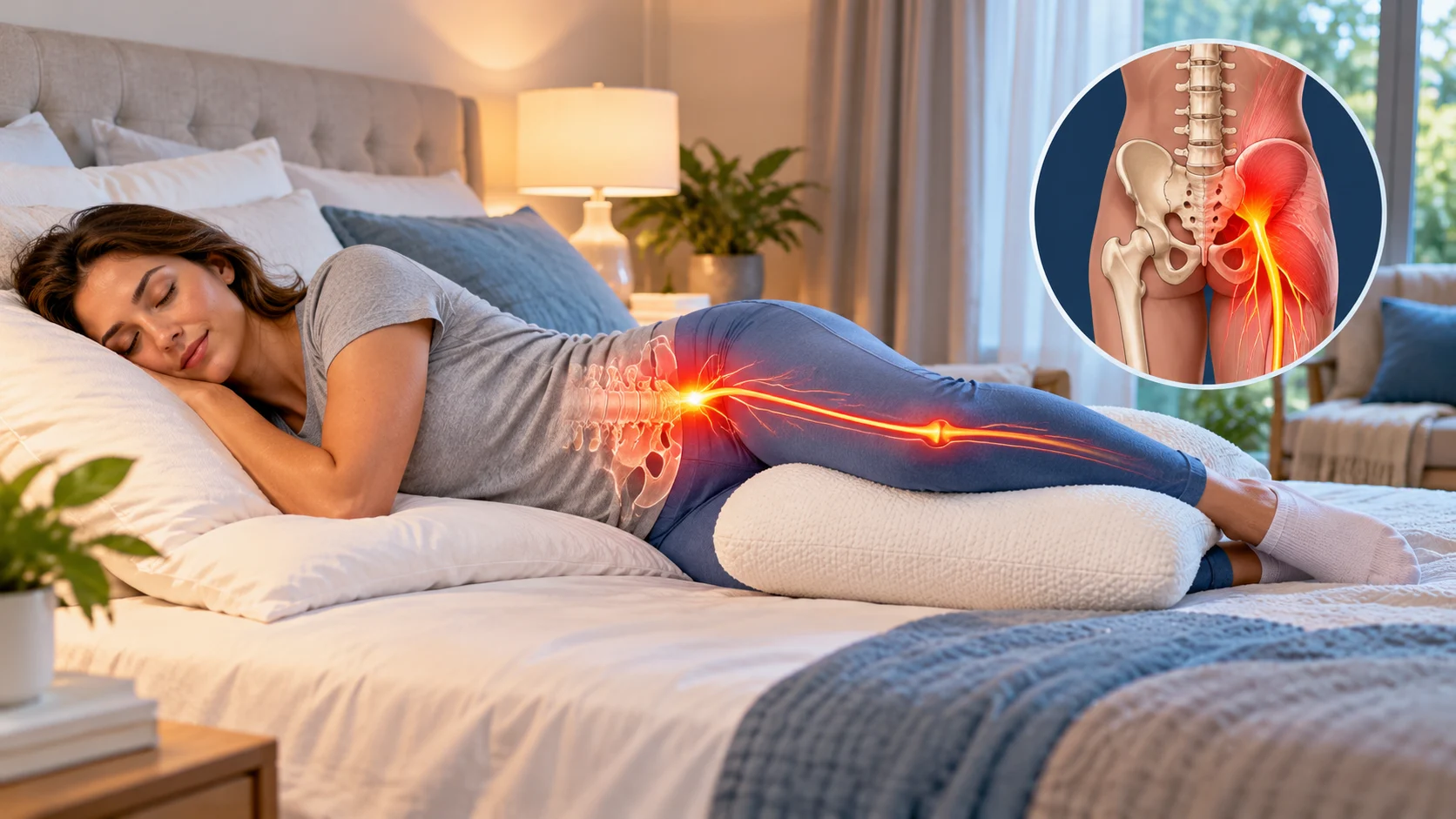

Sciatica can make getting a comfortable night’s sleep difficult, especially when pain travels from the lower back into the buttock or leg. Some people experience burning sensations, tingling, or discomfort that becomes more noticeable when lying down. Finding the best way to sleep with sciatica can help reduce unnecessary pressure, improve nighttime comfort, and support better rest during recovery.
The sciatic nerve is formed from nerve roots in the lower spine and travels through the pelvis into the legs. When these nerve roots become irritated or compressed, pain and other neurological symptoms may develop. Sleeping positions, mattress support, and daily movement habits can influence how comfortable someone feels, although they do not necessarily address the underlying cause.
This guide explains the best sleeping positions for sciatica, common symptoms, causes, nighttime relief strategies, and recovery expectations. It also explores practical ways to adjust pillows, mattresses, and bedtime routines while identifying warning signs that require medical attention.
What Is Sciatica?
Sciatica describes pain or other symptoms caused by irritation or compression of nerve roots that contribute to the sciatic nerve. It commonly produces discomfort along one side of the lower body, extending from the lower back or buttock into the leg. The intensity can range from mild irritation to pain that interferes with walking, sitting, and sleeping.
Sciatica is a symptom pattern rather than a separate disease with one specific cause. A herniated lumbar disc is one common explanation, although other spinal conditions may also irritate the affected nerve roots. Some individuals experience predominantly leg pain, while others report both lower back discomfort and symptoms extending below the knee.
The condition can also cause tingling, numbness, or muscle weakness when nerve function becomes affected. Symptoms vary between individuals and may change with movement or posture. Understanding the underlying cause is important because effective treatment depends on identifying the condition responsible for nerve irritation.
Common Symptoms of Sciatica
The most recognizable symptom of sciatica is pain that travels from the lower back or buttock into one leg. Some people describe a sharp, shooting sensation, while others experience aching, burning, or electric-like discomfort. The pain may extend into the calf or foot depending on the irritated nerve root.
Tingling, numbness, and weakness can accompany sciatic nerve pain. These symptoms may affect particular areas of the leg or foot rather than the entire limb. Some individuals notice that certain movements, coughing, or prolonged sitting increase discomfort, while changing positions temporarily reduces symptoms.
Sciatica symptoms sometimes fluctuate throughout the day and become especially troublesome at night. However, pain traveling into the leg can also have other causes, including hip conditions or peripheral nerve problems. A healthcare professional can examine the symptoms and determine whether they are consistent with lumbar nerve irritation.
What Causes Sciatica Pain?
A herniated lumbar disc is one of the most common causes of sciatica. The condition occurs when disc material extends beyond its usual position and irritates or compresses a nearby spinal nerve root. This irritation can produce pain that travels along the nerve’s distribution into the buttock and leg.
Age-related spinal changes can also contribute to sciatica, particularly when they narrow spaces around the nerves. Lumbar spinal stenosis and degenerative changes may affect nerve function in some individuals. Less commonly, injuries or other medical conditions may produce similar symptoms that require a different treatment approach.
Sciatica does not always develop after a specific injury or unusual movement. Age, inherited characteristics, smoking, and certain physical demands may influence the likelihood of spinal problems. Because several conditions can produce radiating leg pain, persistent symptoms should be evaluated rather than attributed automatically to poor posture or sleeping habits.
Why Does Sciatica Feel Worse at Night?
Sciatica may feel worse at night because certain lying positions place uncomfortable tension or pressure on irritated spinal structures. Remaining in one position for an extended period can also make stiffness or discomfort more noticeable. The relationship between sleeping position and symptoms differs because the source of nerve irritation varies between individuals.
During the day, regular movement and changing activities may temporarily alter how symptoms feel. At bedtime, reduced distractions can make persistent pain more noticeable even when the underlying condition has not worsened. Difficulty finding a comfortable position may further interrupt sleep and contribute to fatigue.
Nighttime discomfort does not necessarily indicate that sciatica is becoming more severe. However, persistent pain that regularly wakes someone, continues despite reasonable adjustments, or occurs alongside concerning symptoms deserves medical evaluation. Identifying the cause helps guide treatment rather than relying only on repeated changes in sleeping position.
Best Way to Sleep with Sciatica
The best way to sleep with sciatica is generally the position that reduces symptoms while allowing the body to remain comfortably supported. Many people find relief by lying on their side with a pillow between their knees. Others prefer sleeping on their back with support underneath the knees.
There is no single sleeping position that works for everyone because different spinal conditions respond differently to movement and posture. A position that helps one person may worsen another person’s radiating leg pain. Small adjustments to hip position, knee support, or pillow placement may make sleeping more comfortable without requiring major changes.
Avoid forcing your body into a rigid posture simply because a particular position is widely recommended. The objective is to find a relaxed arrangement that does not significantly increase pain, tingling, or numbness. If symptoms remain severe despite comfortable positioning, additional treatment may be necessary to address the underlying problem.
Side Sleeping with a Pillow Between Your Knees
Side sleeping is a common option for people experiencing lower back discomfort and sciatica symptoms. Placing a pillow between the knees can help keep the hips comfortably aligned and prevent the upper leg from dropping forward. This adjustment may reduce twisting through the pelvis and lower back during sleep.
Begin by lying on whichever side feels most comfortable, with the knees slightly bent. Place a pillow thick enough to support the upper leg without pushing it into an uncomfortable position. Keep the shoulders and hips relaxed, and adjust the pillow if it creates additional pressure or discomfort.
Some people prefer sleeping on the side opposite their painful leg, while others feel better lying on the affected side. Neither approach is universally correct. Choose the position that allows the greatest comfort, and change sides if numbness, pressure, or radiating pain becomes more noticeable.
Sleeping on Your Back with Knee Support
Sleeping on your back may provide relief from sciatica when the legs and lower back are supported comfortably. Placing a pillow beneath the knees allows them to bend slightly, which some people find reduces lower back tension. This arrangement may be especially useful when lying completely flat increases discomfort.
Select a pillow that supports the knees without raising them excessively. Your head pillow should also allow the neck to rest comfortably rather than forcing it forward. Small adjustments to the height and firmness of these supports can make a noticeable difference in comfort throughout the night.
Back sleeping may not suit everyone, particularly individuals who experience increased symptoms in this position. It can also worsen breathing problems in some people with obstructive sleep apnea. If lying on your back aggravates pain or interferes with breathing, consider an alternative position and seek professional guidance when appropriate.
Is Sleeping on Your Stomach Bad for Sciatica?
Sleeping on your stomach may increase lower back discomfort for some people because it can place the spine in a more extended position. Turning the head to one side for long periods may also create neck stiffness. However, the effect on sciatica depends on the underlying spinal condition and individual comfort.
Some people experience relief in positions involving gentle spinal extension, while others find that the same position increases radiating leg pain. Therefore, stomach sleeping is not automatically harmful for everyone with sciatica. The important consideration is whether symptoms improve, remain manageable, or become worse during and after sleep.
If you prefer sleeping on your stomach, a thin pillow beneath the lower abdomen or pelvis may improve comfort in certain cases. Avoid forcing the position if it produces sharp pain or additional leg symptoms. A physical therapist can help identify positions that are more suitable for your particular symptoms.
How to Choose a Mattress for Sciatica Pain
A supportive mattress can influence sleep comfort, but there is no single mattress type proven best for everyone with sciatica. Some people prefer medium-firm surfaces, while others need a slightly softer or firmer feel. The ideal choice depends on sleeping position, personal comfort, and how the mattress supports the body.
A mattress that feels excessively soft may allow uncomfortable sinking, while an overly firm surface can create pressure around the shoulders or hips. Neither extreme is automatically responsible for sciatic nerve pain. Testing different levels of support and evaluating symptoms over several nights may help identify a comfortable option.
Replacing an expensive mattress is not necessarily the first step when sciatica disrupts sleep. Adjusting pillow placement or using an appropriate mattress topper may provide sufficient comfort improvements. Persistent radiating pain should still be assessed because bedding adjustments cannot correct every medical cause of nerve irritation.
Best Pillow Positions for Sciatica Relief
Pillows can help maintain comfortable body positioning while sleeping with sciatica. Side sleepers often benefit from support between the knees, while back sleepers may prefer a pillow underneath both knees. These arrangements can reduce uncomfortable twisting or tension without requiring a complicated sleep setup.
The pillow’s size and firmness should match the position you use most frequently. A support that is too thick may create an awkward hip angle, while one that is too thin may not provide enough separation between the legs. Experiment with modest adjustments instead of forcing the joints into unfamiliar positions.
Additional pillows around the body can sometimes help prevent unwanted movement during sleep. However, excessive support can make changing positions difficult or uncomfortable. Focus on a simple arrangement that allows natural movement and reduces symptoms rather than trying to hold the spine perfectly still throughout the night.
How to Get Out of Bed with Sciatica
Getting out of bed can be uncomfortable when sciatica symptoms are strongest after resting. Sudden bending or twisting may temporarily increase pain in some individuals. Moving slowly and using a coordinated technique can make the transition from lying down to standing feel more manageable.
One approach involves turning onto your side and gently moving the legs toward the edge of the bed. Use your arms to help raise your upper body into a sitting position while allowing the legs to lower. Pause briefly before standing so you can assess comfort and balance.
This approach is sometimes called a log-roll technique, although maintaining perfectly rigid movement is not necessary for everyone. Use it only if it feels more comfortable than your usual method. Significant weakness, dizziness, or difficulty standing should prompt medical advice rather than repeated attempts to move through severe symptoms.
Gentle Movement Before Bed for Sciatica
Gentle movement before bedtime may help some people manage stiffness and find a more comfortable sleeping position. A short walk around the house or several minutes of relaxed movement can be a useful starting point. The activity should remain comfortable and should not significantly increase radiating leg pain.
Some individuals benefit from mobility exercises recommended by a physical therapist. These might include gentle pelvic movements or controlled changes in spinal position, depending on the underlying condition. Aggressive hamstring stretching or repeatedly pulling the painful leg toward the chest may worsen symptoms when a nerve is irritated.
Avoid assuming that every popular sciatica stretch is suitable for your symptoms. Exercises should be selected according to comfort, movement tolerance, and professional recommendations. If gentle activity causes increasing numbness, tingling, or weakness, stop and seek medical guidance before continuing the routine.
Heat and Cold Therapy for Nighttime Sciatica Relief
Heat and cold therapy may provide temporary relief from discomfort associated with sciatica. A wrapped cold pack can help some people manage pain after an aggravating activity, while gentle warmth may relieve accompanying muscle tension. The preferred approach depends on individual comfort rather than one method being universally superior.
Apply a cold pack or warm compress for approximately 15 to 20 minutes while awake, keeping a protective layer between the temperature source and your skin. Check the skin regularly, particularly if sensation is reduced. Avoid falling asleep with heating pads, electric blankets used for targeted treatment, or ice packs against the body.
These techniques may make bedtime more comfortable, but they do not necessarily resolve nerve compression or the underlying spinal condition. People with impaired skin sensation or circulation problems should seek professional advice before using temperature-based treatments. Persistent nighttime pain may require additional medical assessment and treatment.
How to Improve Sleep Quality with Sciatica
Maintaining a consistent sleep schedule may help reduce the additional fatigue associated with persistent sciatica discomfort. Going to bed and waking up at similar times supports a regular sleep routine. Creating a quiet, comfortable sleeping environment can also make it easier to relax when pain disrupts rest.
Avoid spending long periods in bed repeatedly searching for a perfect sleeping position. Instead, try a few comfortable adjustments and allow your body to settle naturally. If pain prevents sleep regularly, discuss symptom management with a healthcare professional rather than increasing medication or trying unfamiliar treatments independently.
Daytime habits can also influence nighttime comfort. Appropriate movement, regular position changes, and avoiding activities that repeatedly worsen symptoms may help some individuals. Maintaining realistic expectations is important because improving sleep often requires managing the underlying sciatica rather than changing bedding or posture alone.
Medical Treatment Options for Sciatica
Sciatica treatment depends on its cause, symptom severity, and whether nerve function is affected. Many people improve with conservative care that includes staying appropriately active, modifying aggravating activities, and participating in physical therapy. A clinician can recommend an individualized plan after considering the location and pattern of symptoms.
Some people may benefit from short-term pain medication, but suitability depends on medical history, age, and other medicines. Over-the-counter pain relievers do not work equally well for everyone and can have important side effects. A healthcare professional can explain appropriate options without relying on prolonged self-medication.
Persistent or severe nerve-related pain may require specialist evaluation, particularly when ordinary activities and sleep remain significantly affected. Selected patients may be offered procedures or, in certain circumstances, surgery when significant nerve compression is confirmed. Treatment decisions should consider potential benefits, risks, neurological findings, and individual recovery goals.
When Should You See a Doctor for Sciatica?
Seek medical advice when sciatic pain remains persistent, regularly interrupts sleep, or significantly limits walking and daily activities. A clinician can evaluate nerve function, assess possible causes, and recommend suitable treatment. Increasing numbness or muscle weakness is particularly important because it may indicate worsening nerve involvement.
Seek emergency medical care for new difficulty urinating, loss of bladder or bowel control, numbness around the groin or saddle area, or rapidly worsening leg weakness. These symptoms may indicate serious compression of the spinal nerves, including cauda equina syndrome. Immediate assessment is important because delays can increase the risk of lasting complications.
Back or leg pain accompanied by fever, major injury, unexplained weight loss, or a history of cancer may also require urgent medical assessment. Although many cases of sciatica are not emergencies, warning signs should not be ignored. Appropriate examination helps determine whether imaging, specialist care, or another investigation is needed.
Conclusion
The best way to sleep with sciatica is the position that minimizes discomfort while providing comfortable support. Side sleeping with a pillow between the knees and back sleeping with a pillow beneath the knees are common options. However, individual responses vary, and no single sleeping position provides guaranteed relief.
Sciatica can develop from a herniated disc, spinal narrowing, or other conditions that irritate lumbar nerve roots. Alongside sleep adjustments, gentle activity, appropriate physical therapy, and professional treatment may support recovery. Persistent or worsening neurological symptoms require medical attention rather than continued experimentation with sleeping positions.
Improving sleep with sciatica often involves several small adjustments rather than one immediate solution. Comfortable bedding, a consistent nighttime routine, and suitable symptom management can help make rest more manageable. With appropriate care, many people experience meaningful improvements and gradually return to more comfortable sleep and everyday activities.
Frequently Asked Questions (FAQs)
What is the best sleeping position for sciatica?
Side sleeping with a pillow between the knees or back sleeping with support beneath the knees may improve comfort. The best position is whichever reduces your individual symptoms without causing additional pain.
Should I sleep on the side that hurts with sciatica?
You can sleep on either side if it feels comfortable. Some people prefer the unaffected side, while others experience relief on the painful side, so use symptoms to guide your choice.
Why does sciatica hurt more when lying down?
Certain lying positions may increase irritation around an affected spinal nerve root. Remaining still for extended periods or becoming more aware of pain at night can also make discomfort feel more noticeable.
Can a pillow help relieve sciatica while sleeping?
A pillow may improve comfort by supporting the knees, hips, or lower body during sleep. Proper positioning can reduce uncomfortable tension, although it cannot directly treat every underlying cause of sciatic nerve irritation.
How long does sciatica usually last?
Many cases improve within several weeks, although some symptoms persist for months. Recovery depends on the underlying cause, nerve involvement, physical activity, and response to appropriate treatment.